

Tombwater (PC, Steam) Review
Gaze into the abyss, Cowfolk
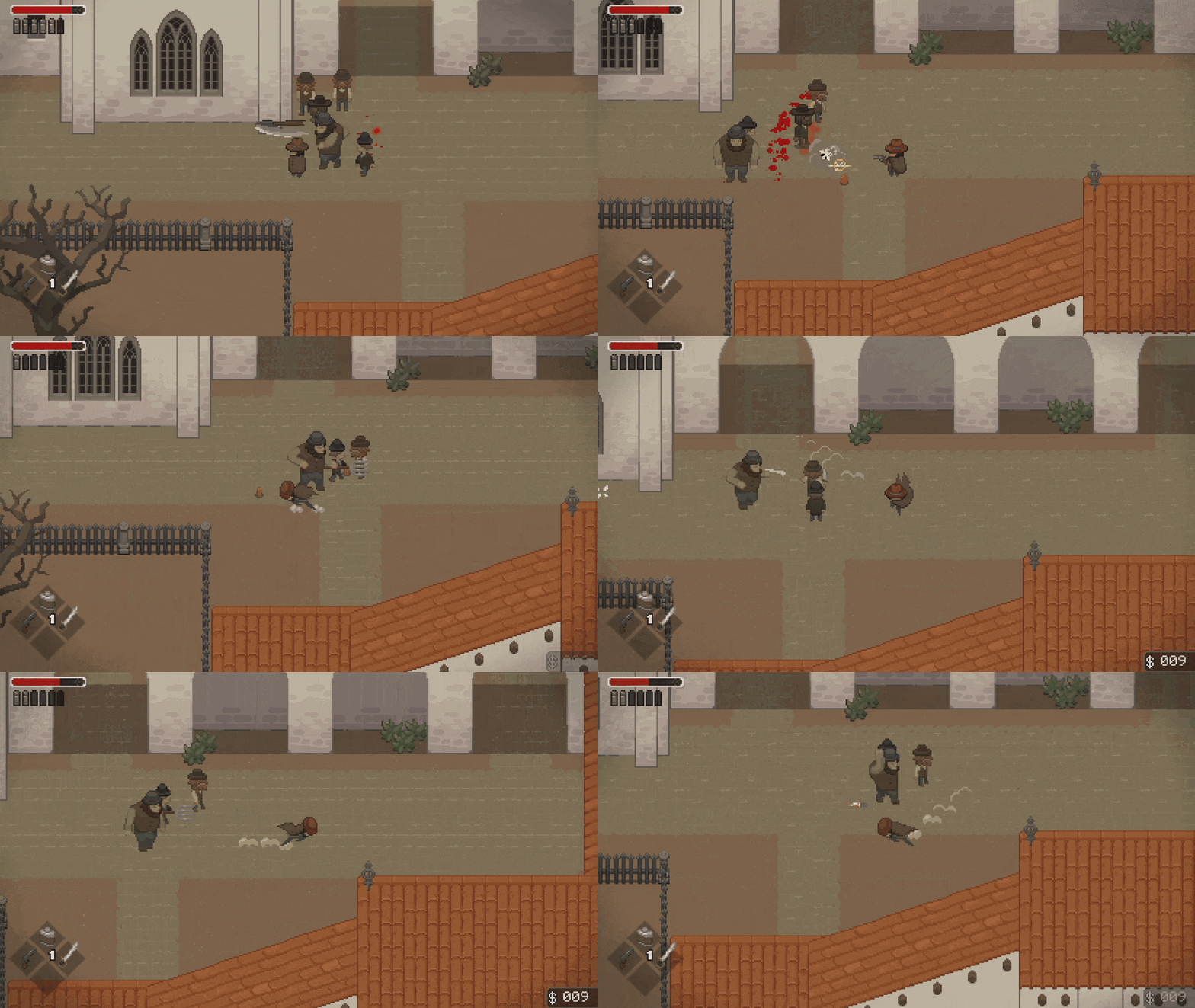
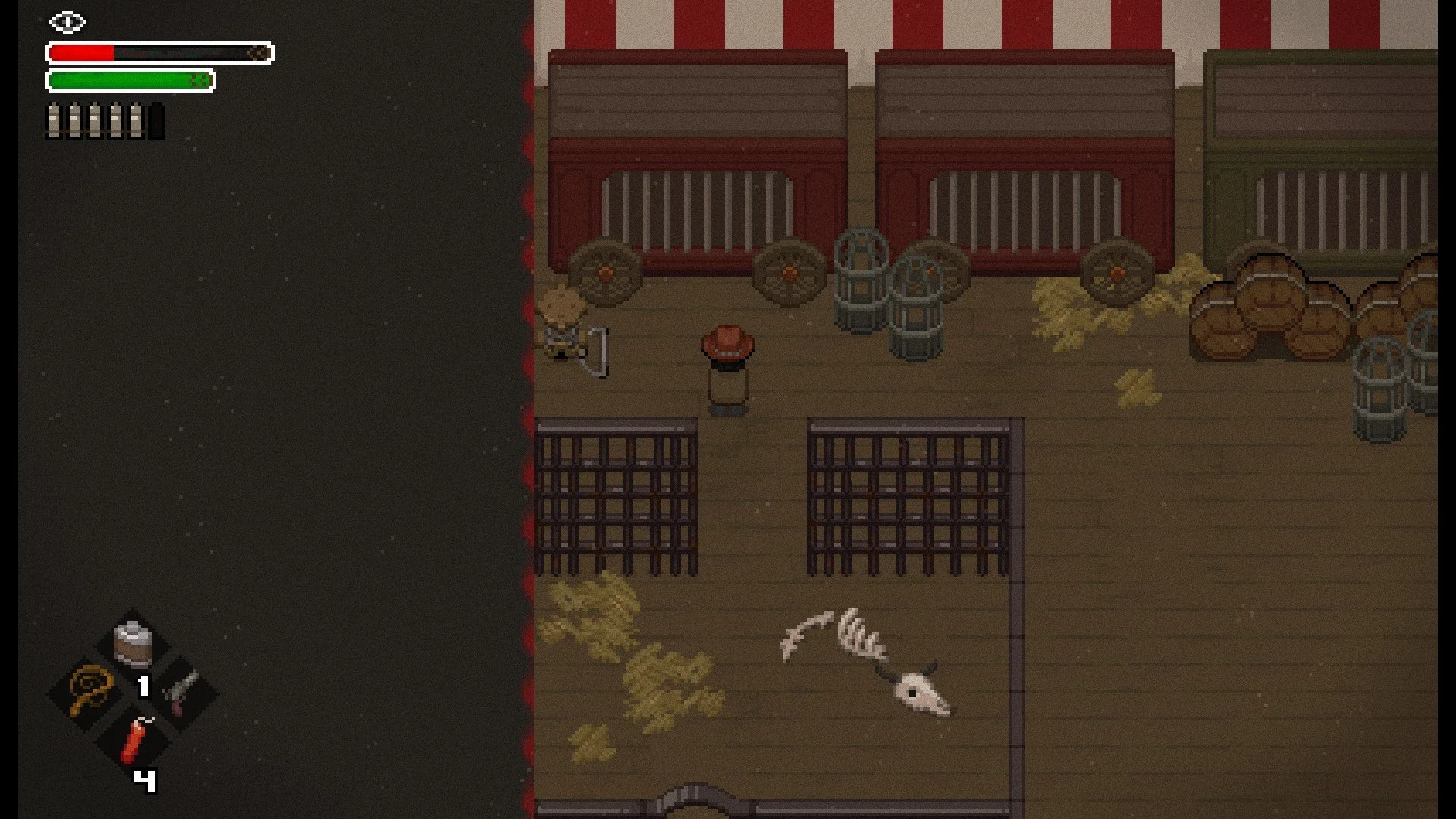
When you think about it, it’s rather surprising that there hasn’t been a Wild West-themed title in the Souslike genre before. The idea of the lone cowboy fighting their way against impossible odds and with limited resources is such a quintessential example of what a Soulslike should be. But yet, here we are, more than a decade after the first Souls game released, still devoid of such an experience. Tombwater, however, aims to fill the gap with incredible verve and gusto.
This is the fourth game for developer Moth Atlas, following experiences like Zelda-inspired RPGs and, most importantly for Tombwater, the short 2D Bloodborne clone, Yarn Town. Clearly, the team has been working towards something more ambitious genre-wise for a while. And with Tombwater, this ambition has been realized with a startling clarity and purpose. If you ever wondered how a modern From Software game would play in 2D, this is as good a representation as you’ll ever get.
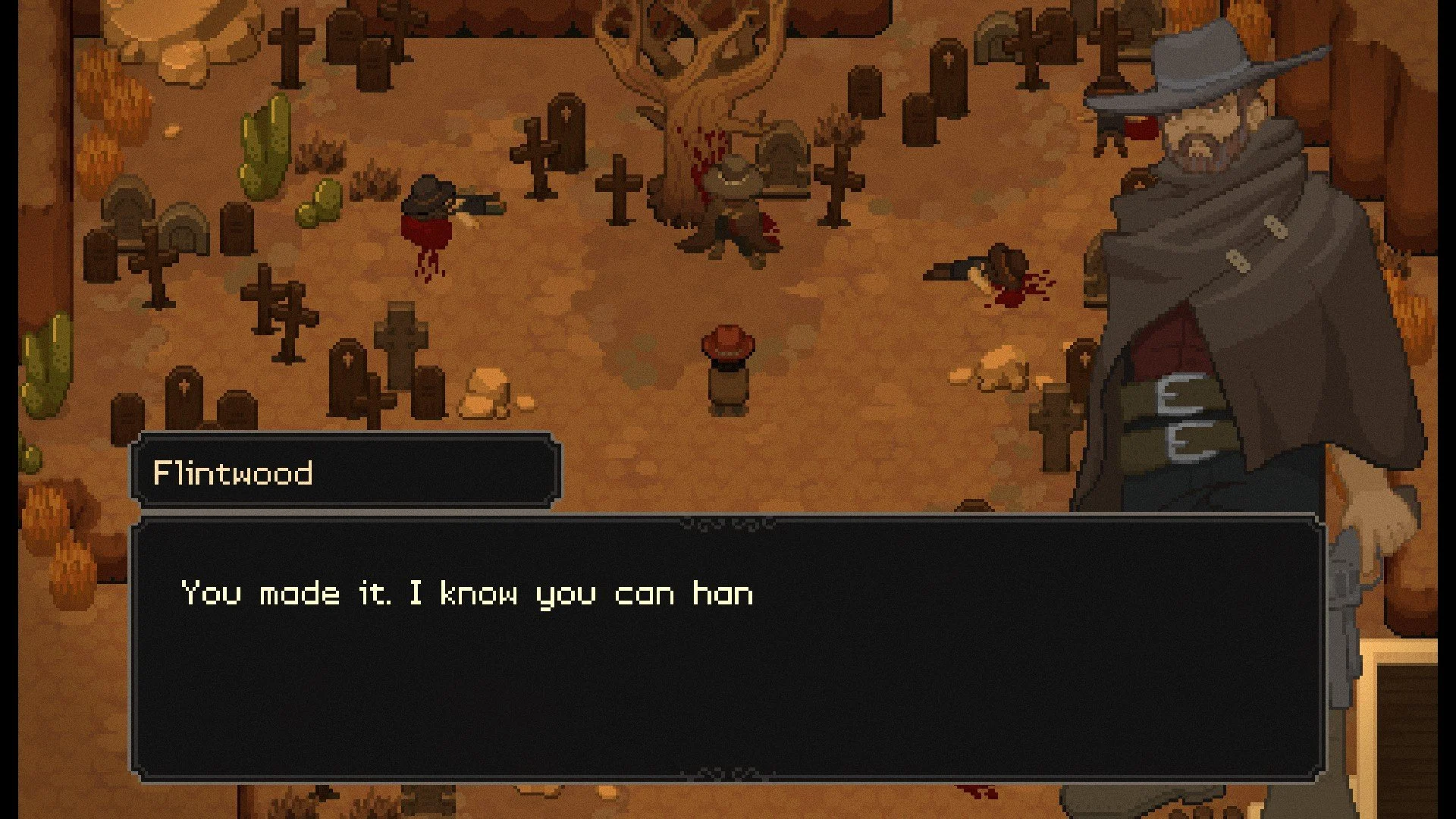
In Tombwater, you play as an unnamed outlaw. Nine years ago, you took part in the cliched “one last job” that, of course, ended up going south, causing your boss Elliott Flintwood and you to go your separate ways. Apparently, you keep loose contact with him because, out of the blue, you receive a letter explaining he’s been the sheriff of a town called Tombwater for a few years. The old acquaintance concludes said letter by offering you seemingly honest work.
At this point, you then get to select your class, determined by the work you’ve been up to in the interim. The available classes include Soldier, an efficient all-around attack class; Gunslinger, perfect for ranged attacks; Occultists, who have a higher degree of magical ability; Tinkerers (the class I selected), who have high Alchemy and are generally a great class for improvisational gameplay; Spellblades, which are the warrior mages of Tombwater; Drifters, or the jack-of-all-trades, master-of-none class; and Nameless, which is the closest Tombwater gets to a barebones, early Dark Souls kind of experience.
You might be wondering at this point how Tombwater falls into the horror genre. Hints of horror are dropped in the first hour, from the opening sequence’s oddball ending to a curious symbol hidden in the title. Tombwater takes its time to introduce its horror-adjacent elements, first by telling you that leaving town is no longer possible. Then, the so-called mayor warns that the town has been overtaken by a mysterious sickness. Finally, after an extended period of time, a rather shocking encounter in a most ironic place lays bare the horrific, Lovecraftian elements that ultimately underpin the core of the narrative.
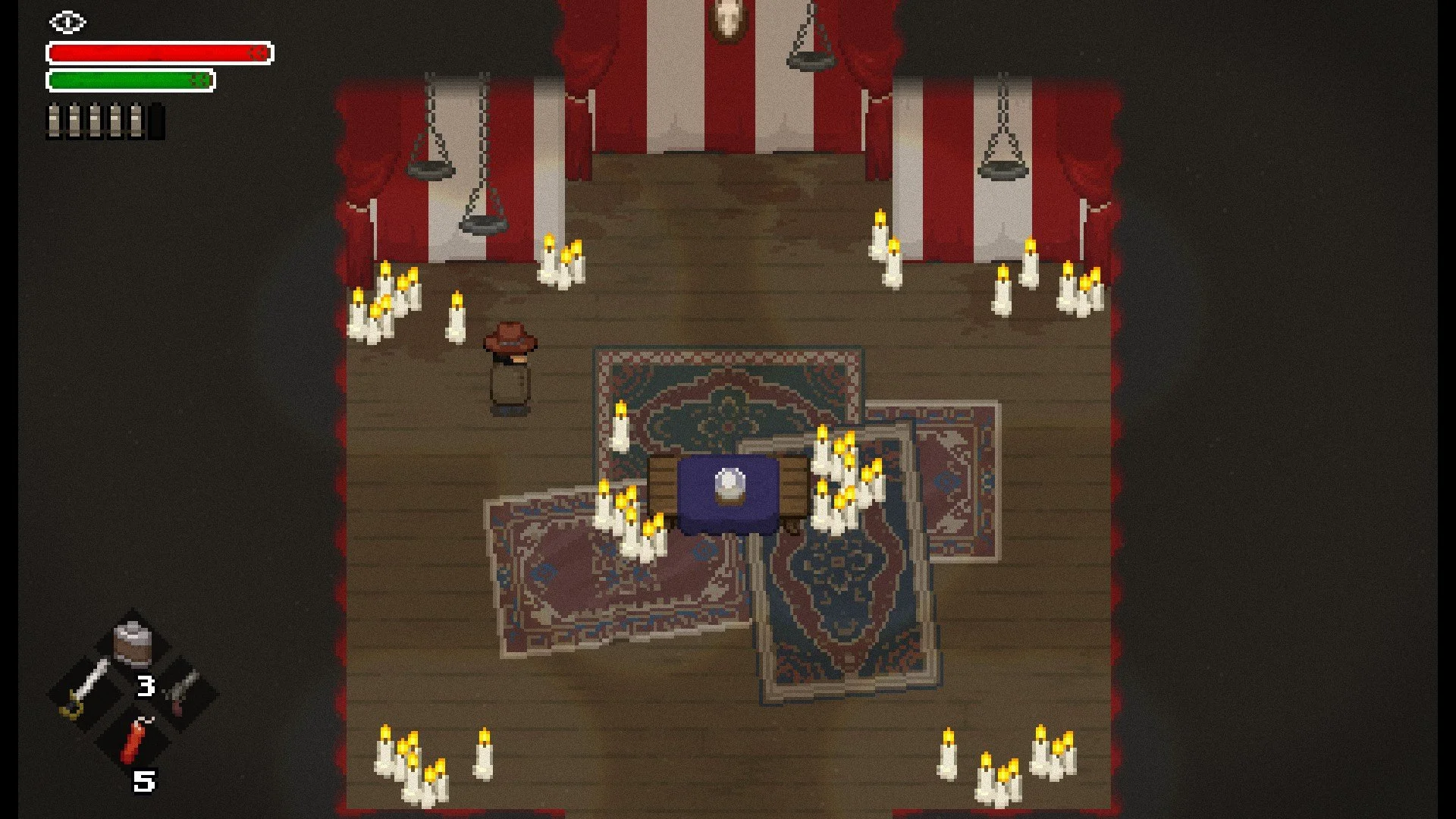
Tombwater sticks very closely to the Dark Souls method of storytelling in providing a sentence or two of background lore inside item descriptions. The actual story is probably more present than Dark Souls, but that’s likely because it would be much harder to get away with the vagueness of that game in a more realistic setting. A lot of the lore will unfurl in flashback “shade” sequences, where you’ll bear witness to relevant past conversations. However, this game remains committed to a certain sense of unsettling dreaminess that, yet again, is clearly a translation of Dark Souls’ own peculiar vision of “lasting shades” to 2D.
This is underscored by the soundtrack, apparently composed by lead designer Max Mraz himself, who has a self-confessed interest and aptitude in audio production. The straight Western-themed stuff is perhaps a bit too sleepy for its own good, to the extent that, when I remembered the warm weather we were having, I felt seriously tempted to hit Alt+F4, run outside, and crack a cold one or two rather than futz around with a gaggle of mute, aggressive townspeople whilst trying to find the next area.
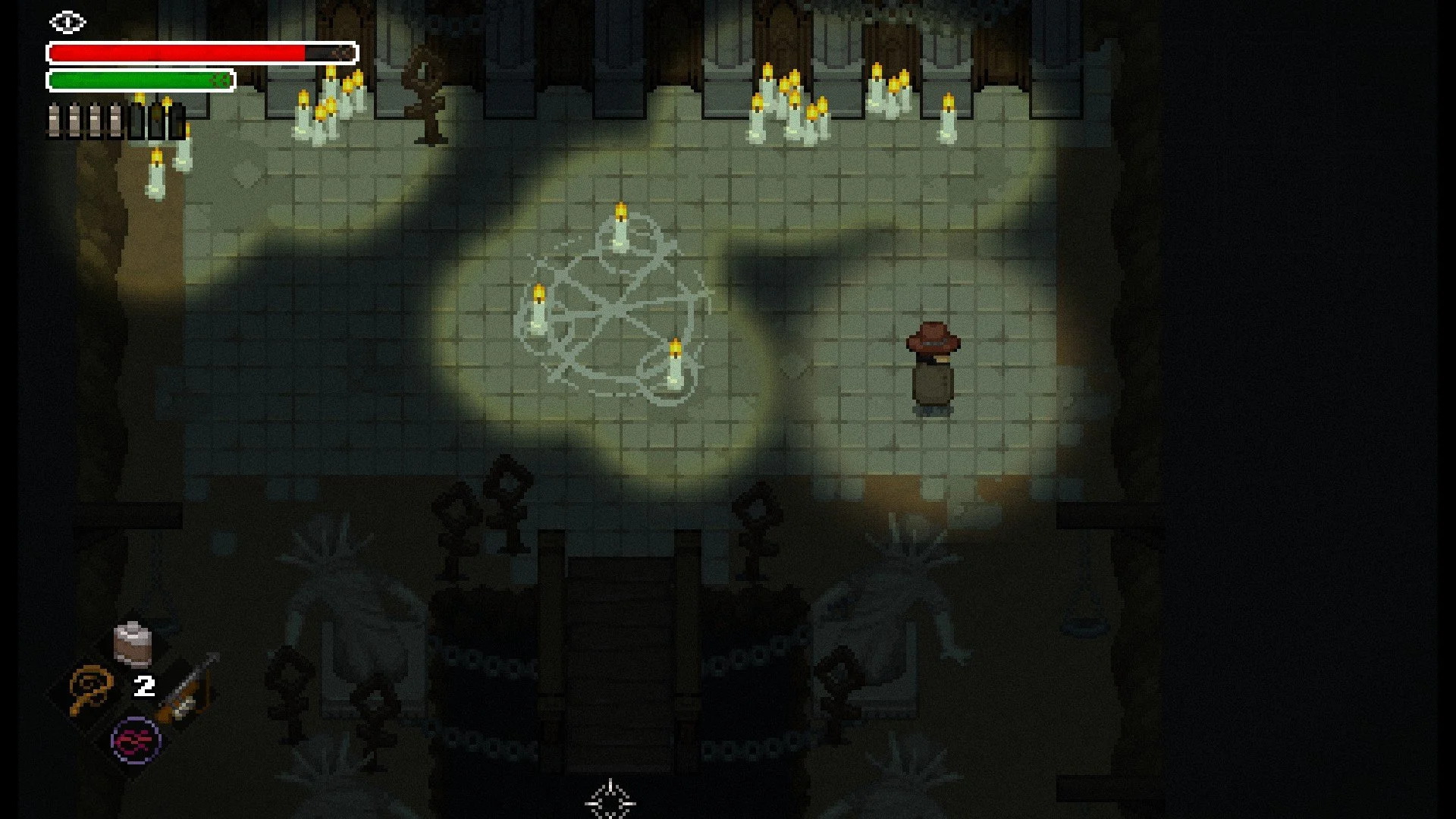
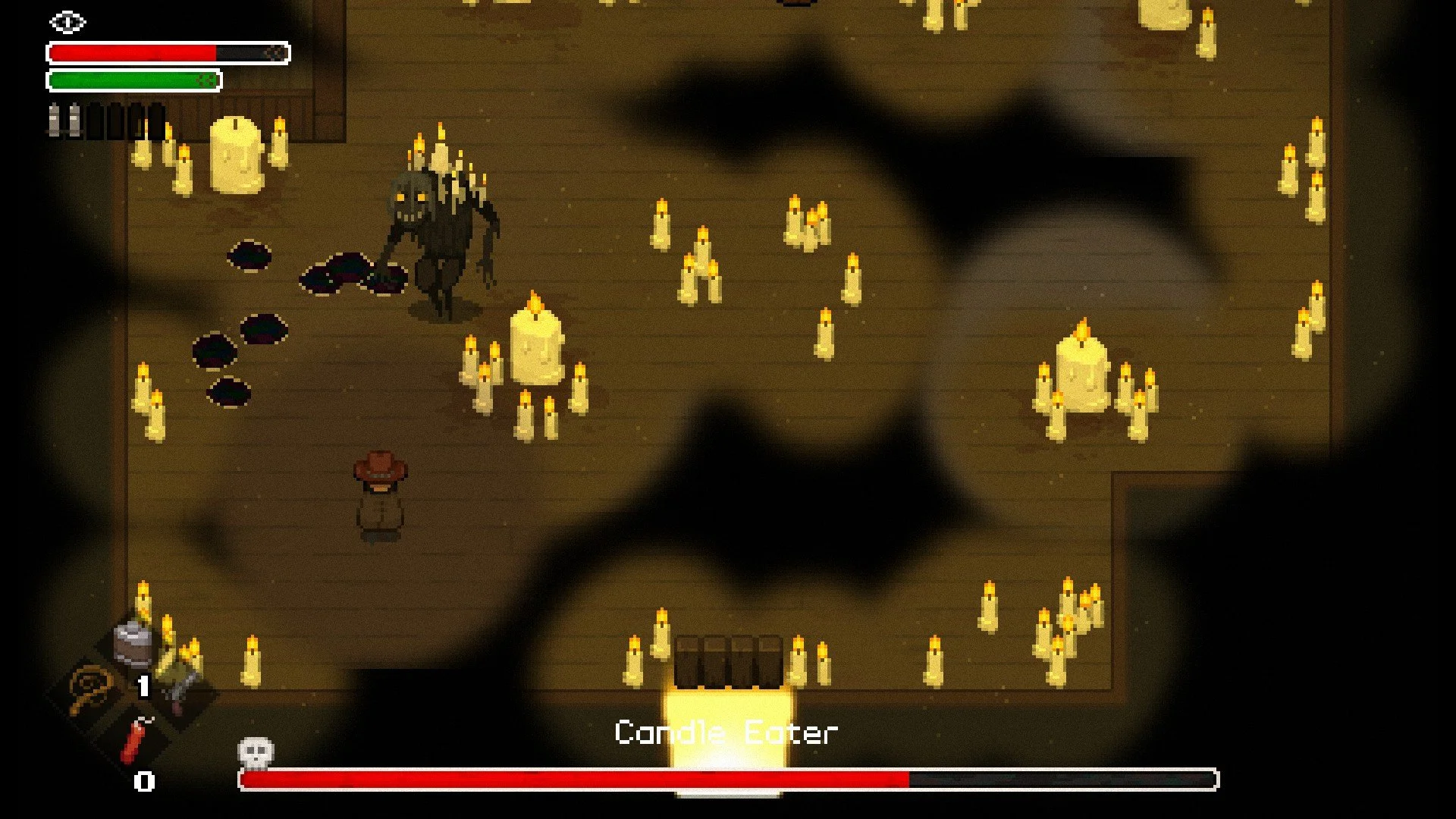
However, the music shines when it leans more into the Resident Evil-style duality of ominous, suspenseful horror mixed with some truly vein-pumping battle music. The track for the optional “Candle Eater” boss specifically mixes creativity with a high degree of frantic energy that stands out, even when compared to the tougher encounters in the later part of the game. The overall sound design can be summarized quickly enough as “low-key, but effective,” thought it is most underscored by the gong that rings every time you’re killed.
The actual difficulty is not necessarily as brutal as Dark Souls. While the game has zero issues with punishing repeatedly poor gameplay, adjusting damage sliders can reduce (or increase) at least some of the frustration that seems baked into this genre’s DNA. Personally, I preferred to play with the default damage settings, partly because the game seemed adequately balanced as it was (barring early trips to the graveyard, at least), but also because of how merciless the game can be to lazy and sloppy gameplay. And unless the damage sliders are turned down to the lowest possible setting, it’s hard to escape that. That being said, there was literally only one occasion I died before retrieving my money, but that might be a measure of the 2D gameplay space.
It’s not all Soulslike action though. Max Mraz also continues to indulge in his predilection for Zelda-like puzzles at a number of points throughout the game. At first, combat is non-existent in most of these locations, but as you progress, enemies will be thrown into the mix. They’re more comparable to obstacles than a way to solve the puzzles themselves. Still, these are decent enough old-school diversions whose enjoyability relies a little on the music (or lack thereof) that plays in these sections.
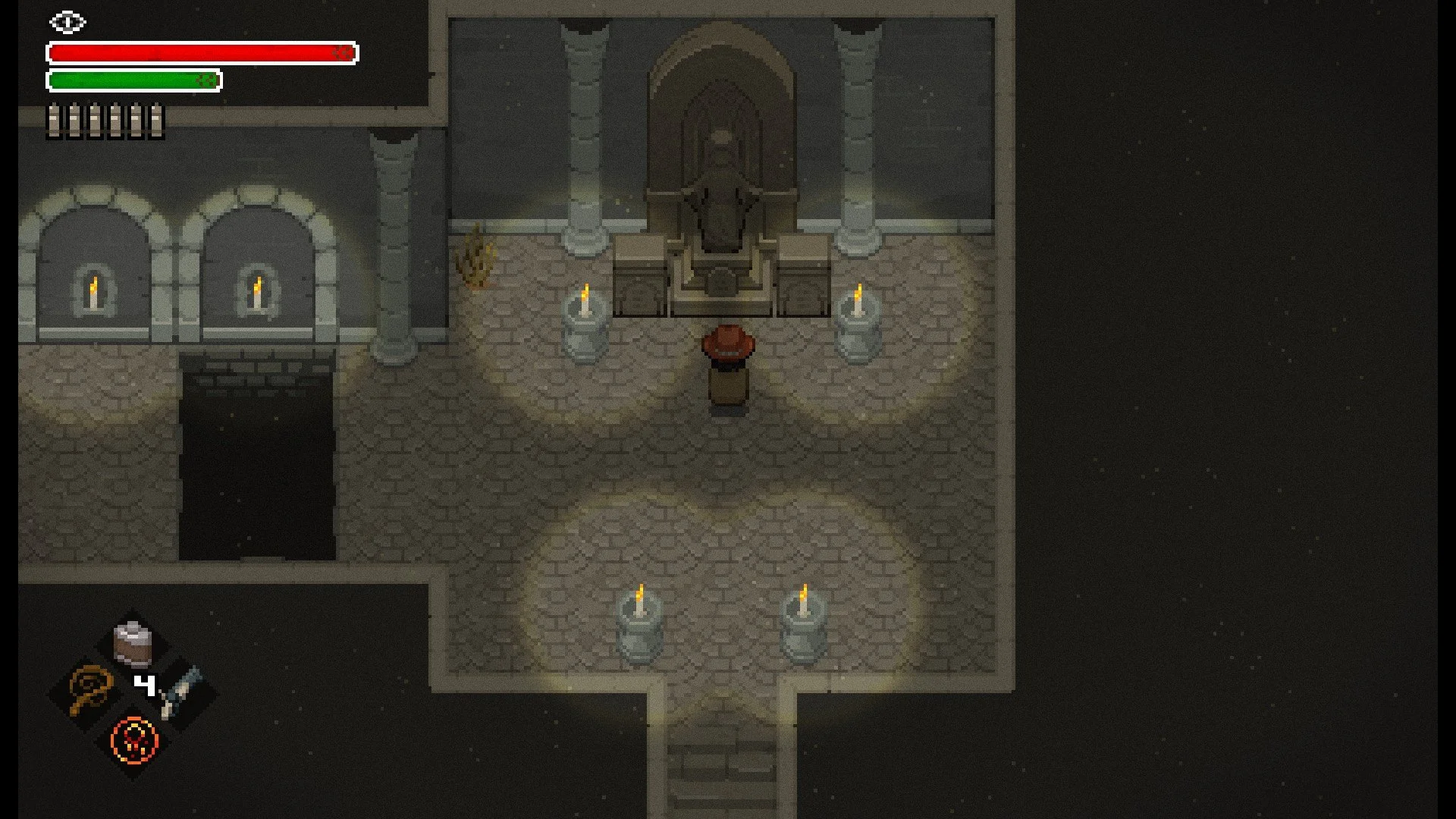
Another notability of Tombwater is its total commitment to thematic-appropriate weaponry and equipment. Gatling guns and dynamite are an obvious example of this, as you might expect, along with silly sounding things like street lamps, railroad spikes, and pitchforks (the latter, at least, is effective at dispersing close-range trash mobs). No weird assault rifles or wands to be found here! Even when weapons are magically enhanced, they don’t really feel like they come from some long-dead civilization, but instead are products of a Wild West society that has a familiarity with supernatural forces.
That brings us to a part of gameplay that might well be entirely optional depending on your play style. Specifically, the usage of magic, some examples being a fire spell, a spellblade, and another one that raised tombstones from the ground. Magic in Tombwater is centered around interaction with occult forces. Meaning that the more magic that’s used within a certain amount of time, the more that you’ll succumb to madness. Scary visions start covering the screen, and you’ll take some continuous damage if you either don’t rest at a campfire or use a Sanity Crystal to get rid of the affliction. This remains true despite a number of options existing to gradually increase your resistance to Madness, but it’s not terribly difficult to manage.
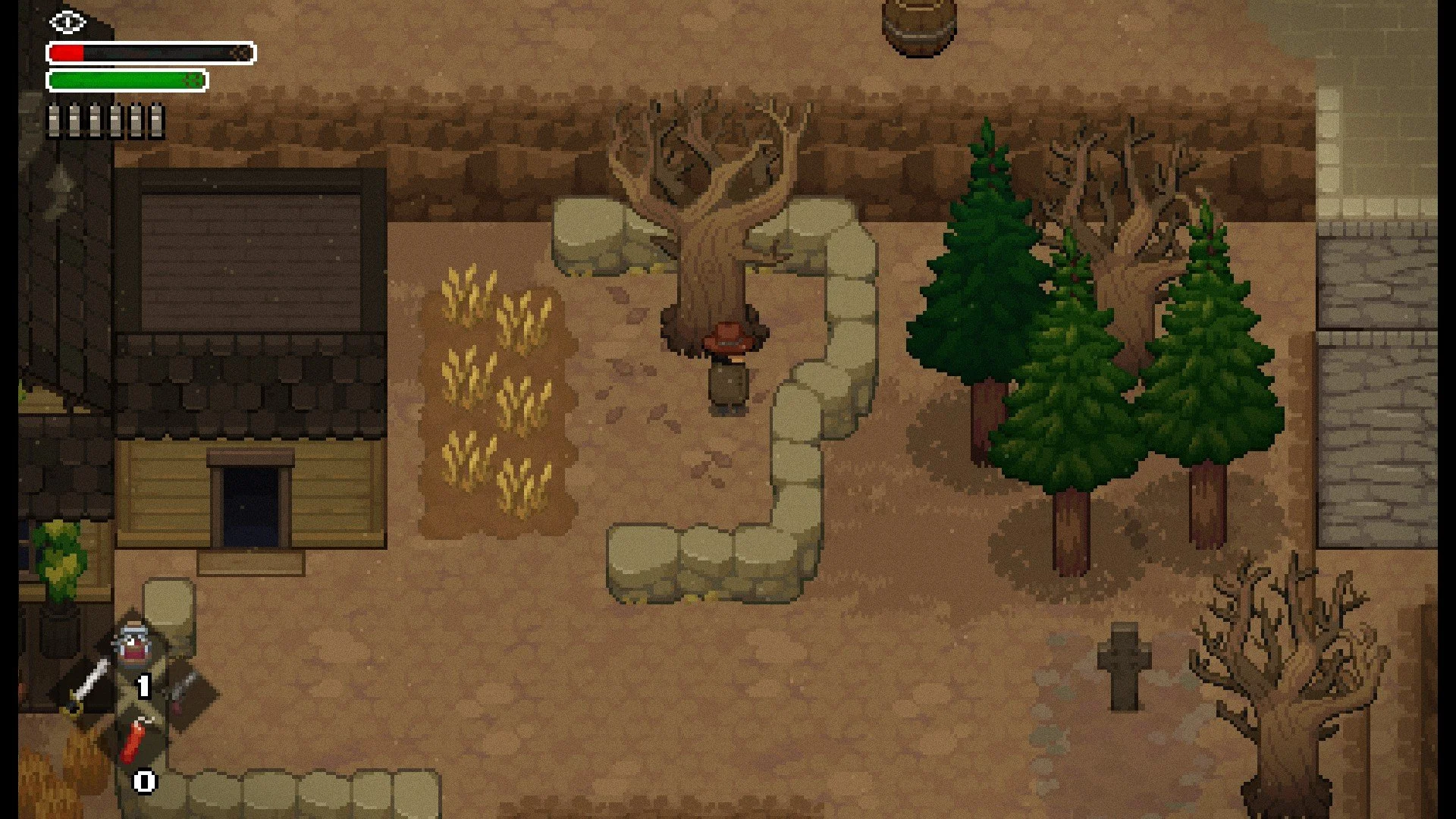
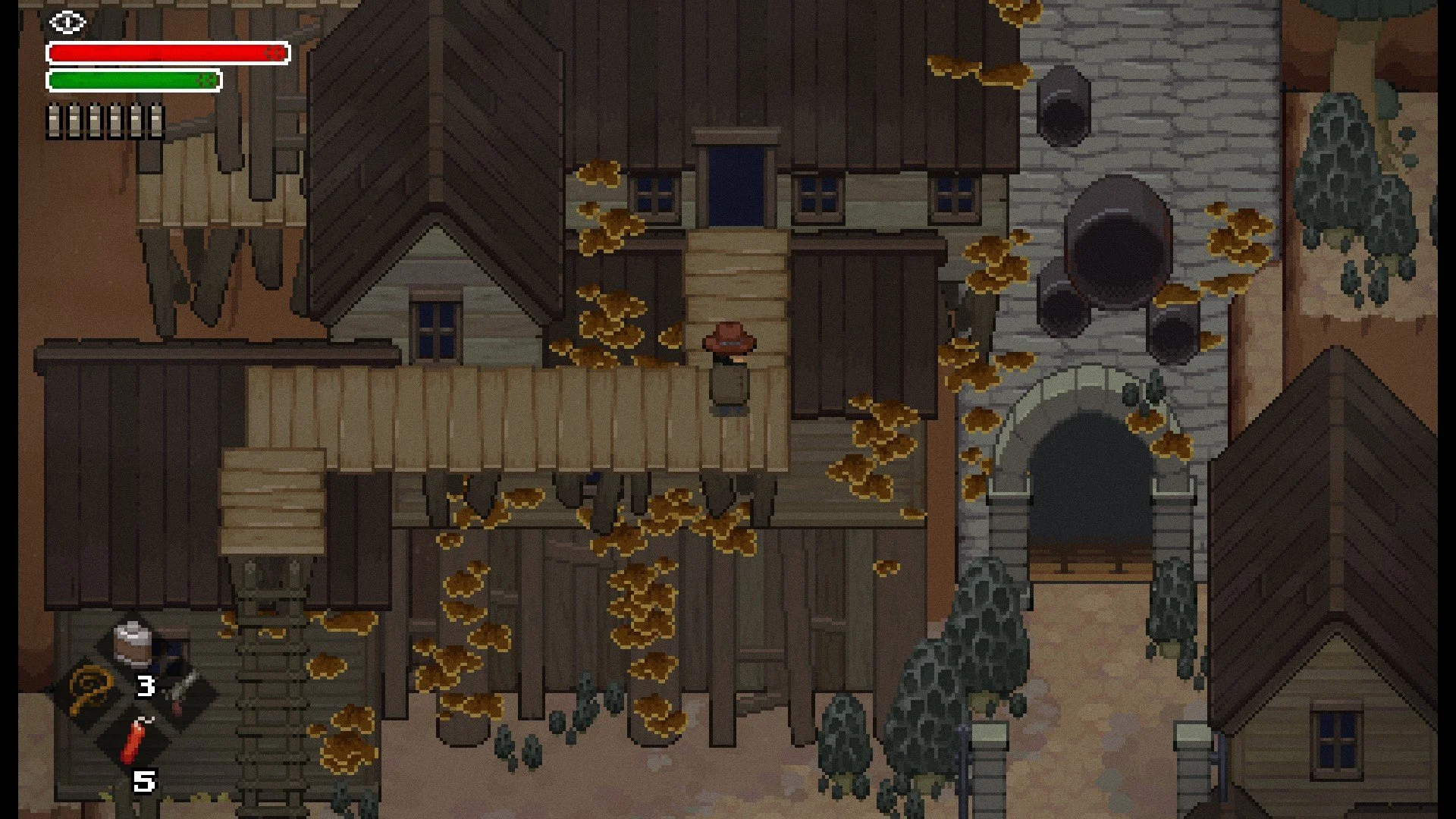
My time with Tombwater was ultimately very satisfying. The game promises at least 20 to 25 hours of content and, given the relative open-endedness of the progression and mild Metroidvania elements, this can easily spin out into a longer game. Moreover, the horror elements are executed very well, even if they’re ultimately supplementary to all the other ingredients in this quick-paced Soulslike Zelda stew. Accessible without feeling blatantly pandering with gameplay mechanics containing a high degree of flexibility in which they can engage with, there’s simply not a single part of the gameplay that’s disappointing. The experience is underscored by a healthy amount of unsettling horror toppings and a thorough commitment to theme and balancing that’s arguably the key to any successful indie game. Even if you aren’t necessarily jonesing for a Soulslike with a Wild West theme, you should check this out because it’s a damned good 2D Soulslike. Period.
Learn more about Tombwater by visiting the official website. Screenshots were captured using native Steam features. A digital copy was provided for content purposes.
DEVELOPED BY: Moth Atlas
PUBLISHED BY: Midwest Games
AVAILABLE ON: PC (Steam)
DEMO: YES
RELEASE DATE: March 31, 2026
What other genre mash-ups would you like to see in games? Share with us in the comments.
Order Fearzine
![FEARZINE #4 - (Physical) [PRE-ORDER]](https://images.squarespace-cdn.com/content/v1/666df3b70ff3a55ff077d05e/08f8e0d2-c95c-4661-b188-b7aa144f3679/Fearzine_issue4_Coverart_FINAL_V01.png)
Issue 4 has sold out from its first print run so we need your help to get more in stock. A physical print copy of Fearzine #4 to hold in your hands like the good old days. Featuring QR codes for every game and creator show that links you to additional information and where you can find the game.
Orders Needed: 93
The arcade classic returns with a full remake that can be enjoyed at home. Damian tells us all about why this arcade shooter is still a blast.