

*This article is a paired down version of JMMReview’s “What is Survival Horror” Please check out the expanded article to learn more and check out Survivalhorrors.com*
Survival horror is a genre focused on player vulnerability, where progression is driven primarily by exploration and puzzle-solving rather than combat.
One of the defining features of early survival horror is that you cannot fight every enemy without using supplies you might need later. Combat is available from the beginning, but you cannot rely on it alone to move forwards. Progress comes from exploring, solving puzzles and finding or combining key items, including literal keys that unlock new paths.
These early games create player vulnerability in a specific way: Resource scarcity which creates player vulnerability, which forces you to choose between selective combat and enemy avoidance. This is the basic playbook of early survival horror games, as I will demonstrate later.
This gameplay loop separates survival horror from typical action games and action horror games. In many action games, your instinct is to deal immediately with any threat on screen. This was true of action games from the same period, including Fade to Black, Die Hard Trilogy and MDK. A threat appears, the game gives you the means to destroy it so you attack.
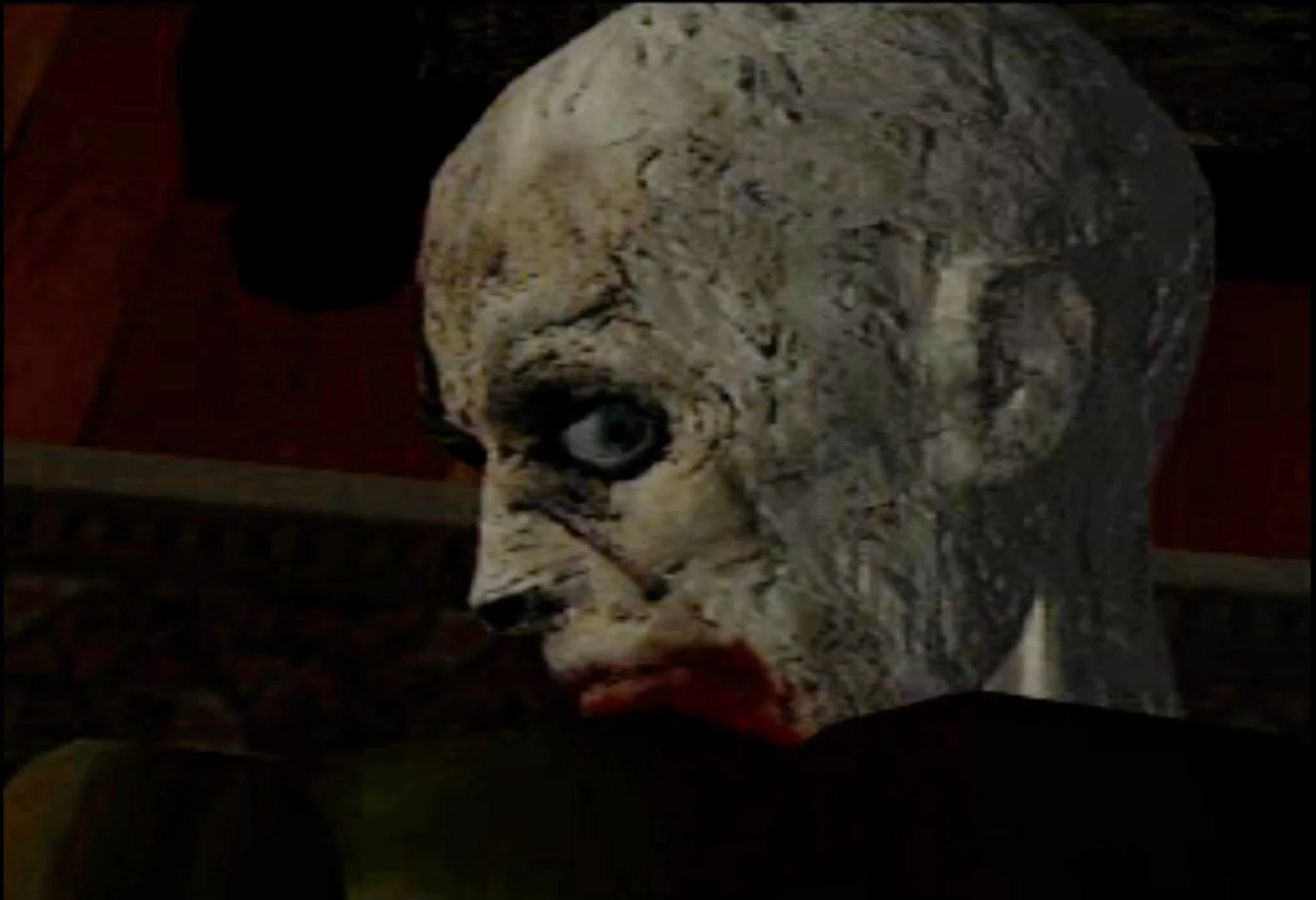
Alone in the Dark (1992) and Resident Evil (1996) changed this familiar relationship by confronting you with threats while limiting your ability to deal with them. This loss of control helped create fear and panic. Horror becomes harder to sustain when you feel completely in control. By limiting that control through resource scarcity, these games create a distinctive gameplay dynamic. You must consider which enemies to fight and which to avoid so that you can preserve resources for later. Dealing with a threat requires strategy and planning rather than an automatic attack.
There are many other traits associated with survival horror. These traits are not universal, and the absence of one or more does not automatically exclude a game from the genre. However, they should work together to create the central gameplay loop described above. The more strongly they reinforce player vulnerability and non-combat progression, the more likely a game is to belong to the survival horror genre.
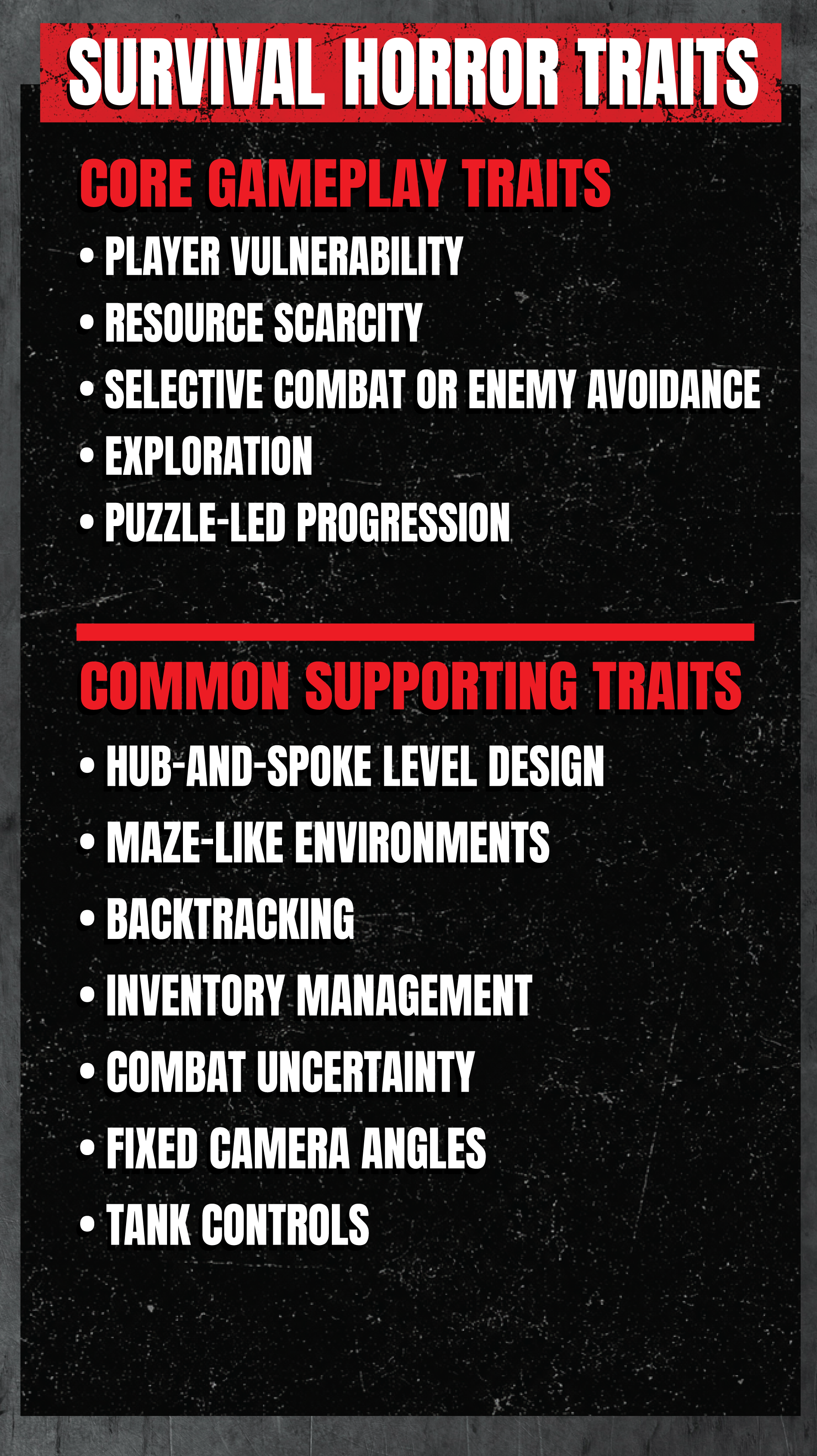
Survival Horror Traits
Core gameplay traits
Player vulnerability
Resource scarcity
Selective combat or enemy avoidance
Exploration
Puzzle-led progression
Common supporting traits
Hub-and-spoke level design
Maze-like environments
Backtracking
Inventory management
Combat uncertainty
Fixed camera angles
Tank controls
One mistake I see people make is treating a single survival horror trait as sufficient to place a game within the genre. Onimusha uses fixed cameras, Dark Souls has hub-and-spoke level design, Professor Layton is built around puzzle-solving and Minecraft has inventory management. None of these features, in isolation, is enough to make a game survival horror.
The important question is not simply how many boxes a game ticks, but how its mechanics work together. In survival horror, scarce resources create player vulnerability and encourage selective combat, while exploration, backtracking and puzzle-solving drive progression. The more closely a game reproduces this relationship, the stronger its claim to belonging to the genre.
What are early survival horror games like to play?
Derceto Manor from Alone in the Dark (1992), The Spencer Mansion from Resident Evil (1996) and Raccoon Police Department from Resident Evil 2 (1998) all have the now iconic hub-and-spoke level design. Most doors are initially locked, forcing you follow a carefully planned series of “spokes” where you will get a key item and then either loop back to a hub or backtrack to the hub to unlock a new spoke.
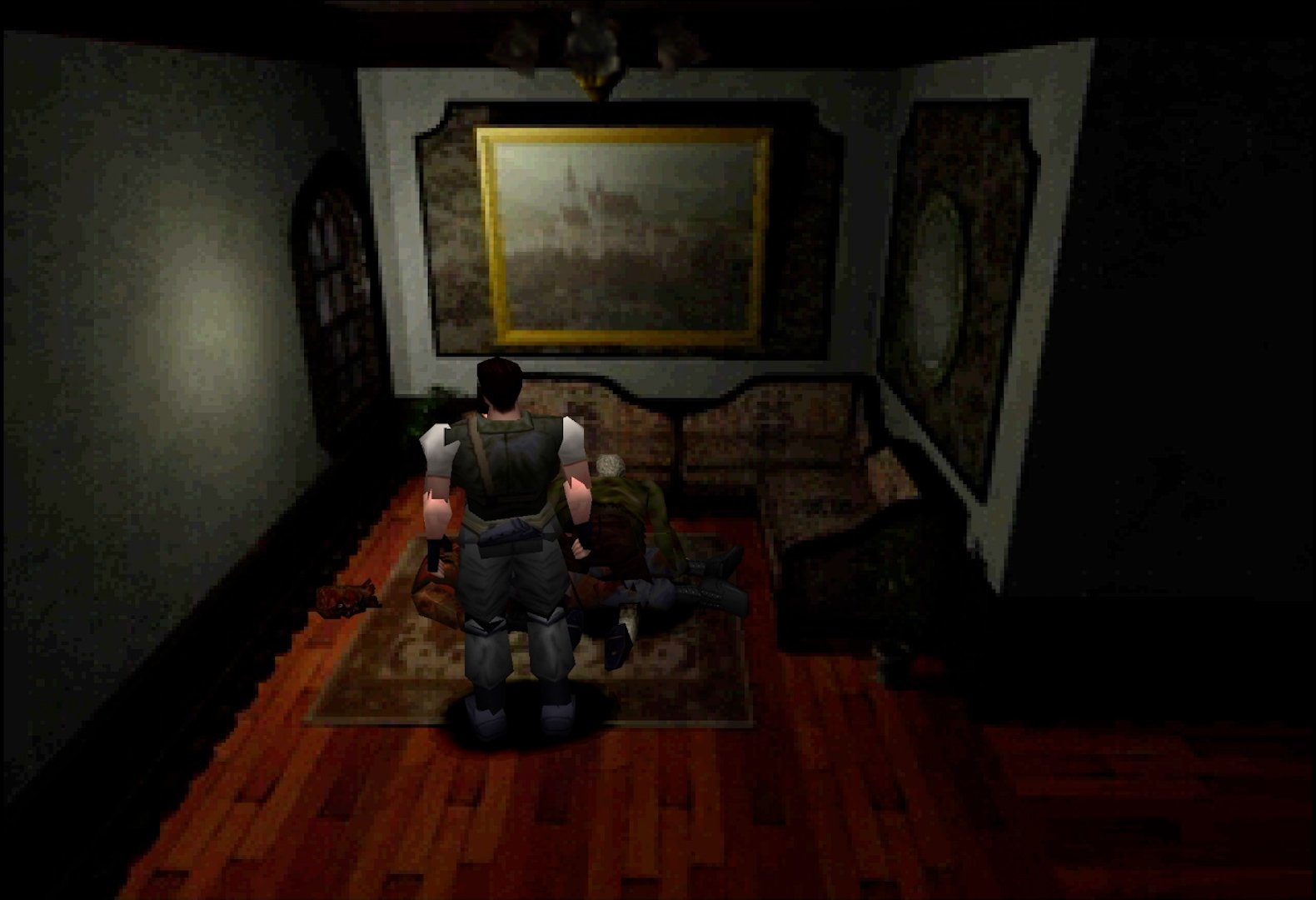
In many cases the spokes are narrow routes through corridors filled with enemies while providing you with limited resources. These games do provide ammo, but enemies don’t drop resources, so you need to be careful with every bullet. This uncertainty encourages you to think before entering combat, even when you may technically have enough ammo to kill the enemy in front of you.
Back tracking also forces you to revisit the same corridors, which means that any enemy you leave alive may become a problem later. Deciding which enemies to kill becomes a tactical choice. You might clear a narrow corridor that you expect to use several times while avoiding an enemy in a room you only need to visit once.
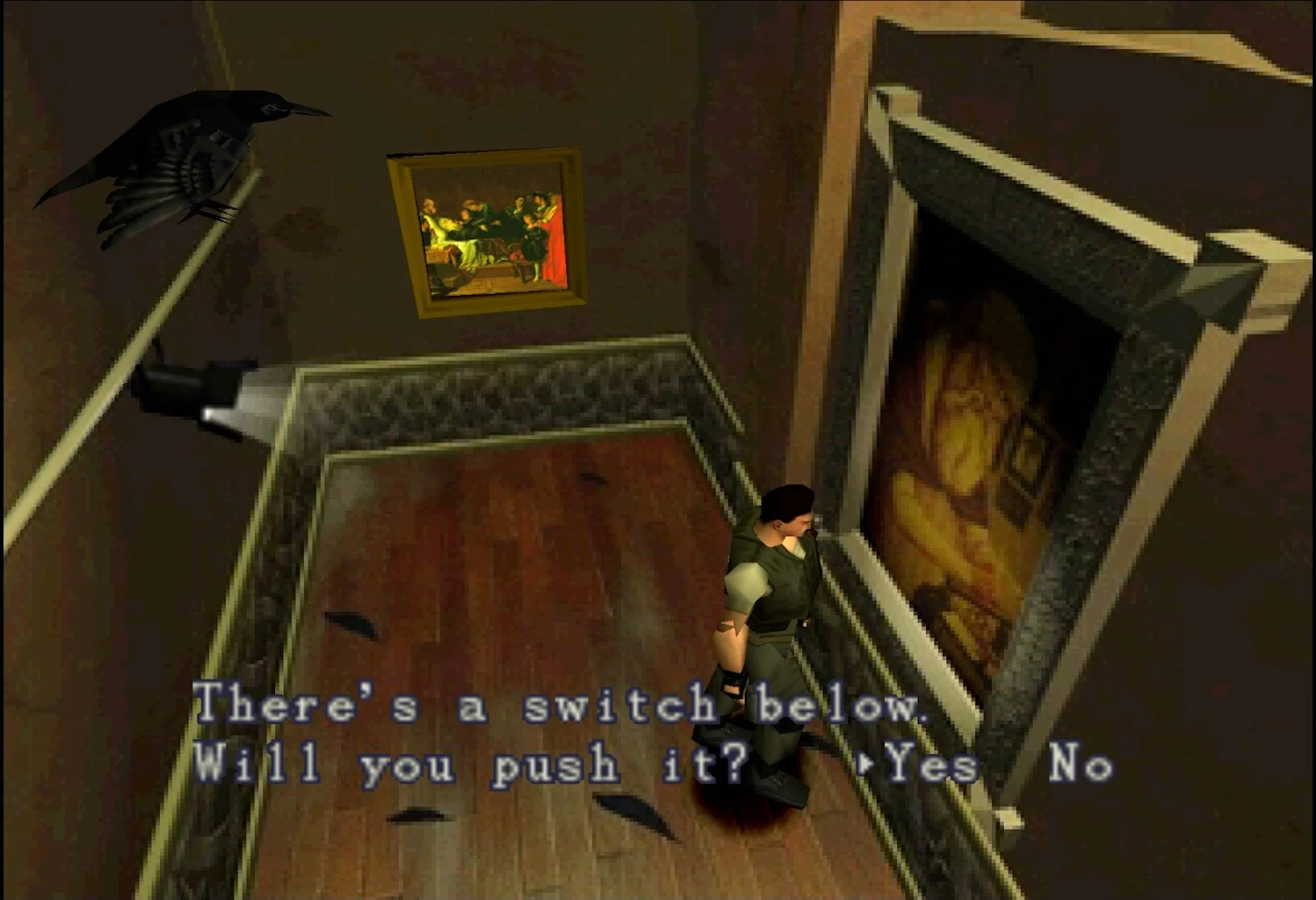
Progress comes from finding keys, remembering locked doors, backtracking and solving puzzles. Towards the end of survival horror games, you can accrue more ammo if you hoard it, solve optional puzzles or backtrack to previously inaccessible areas. By this point, however, you have already spent much of the game avoiding enemies and carefully preserving your supplies.
Although ammo becomes more plentiful later, combat still remains optional in many areas. Killing every enemy does not open the path ahead or complete the game. You must still explore, solve puzzles and find the key items needed to progress.
It is true that early Resident Evil games become more action-heavy towards the end and you get large arsenal of guns and explosive weapons. However, this comes only after considerable struggle and does not change the structure of the game as a whole.
I often hear the argument that the early Resident Evil games played the way they did because the technology needed for a game like Resident Evil 4 didn’t exist. Technology influenced the original game’s camera and controls, but it didn’t force Capcom to make combat avoidable, prevent ordinary enemies from dropping resources or base progression on keys and puzzles. Those were deliberate design choices, not simply hardware limitations.
What are “modern survival horror” games like to play?
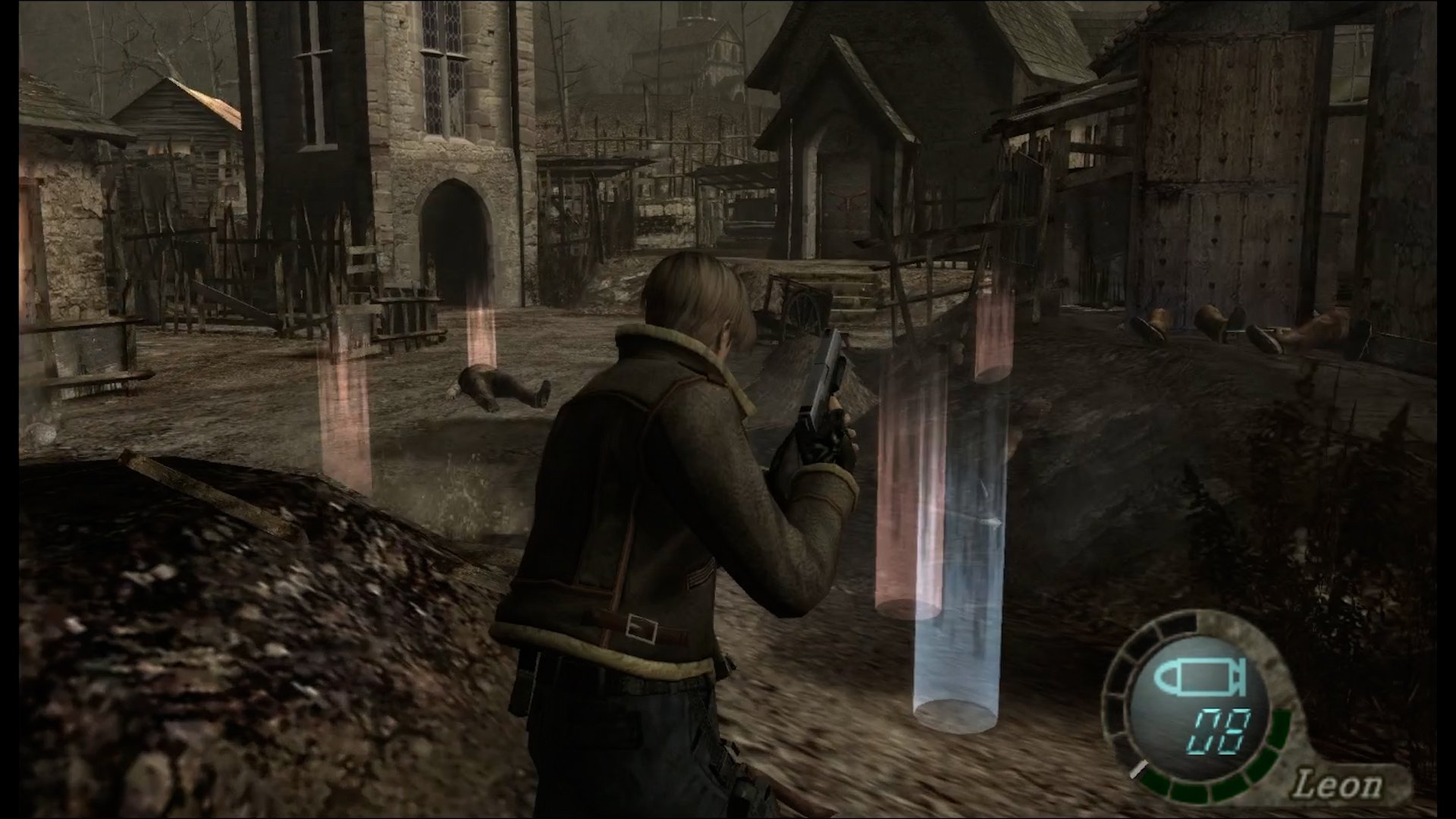
I don’t agree with term “modern survival horror” when describing games like Resident Evil 4, Dead Space and The Evil Within. It’s often used to describe horror games with more action elements. One problem is that nothing stays modern for forever and referring to Resident Evil 4 as being modern, a game that is now over 2 decades old, feels inaccurate.
Depending on which school of thought you follow, Resident Evil 4 either changed survival horror or moved the series into action horror. The best way to sum up the shift in gameplay is this:
In Resident Evil 2 Leon is trapped in Raccoon City with zombies and monsters.
In Resident Evil 4 infected villagers and monsters are trapped in Spain with Leon.
Instead of the narrow, claustrophobic rooms of the Spencer Mansion, many areas in these games are designed more like open combat arenas, with looping routes that allow you to circle around enemies and make use of explosive barrels and item pick-ups.
Game progression is not the only incentive to combat, enemies drop ammo, healing items and money so it is always a good idea to kill everything in the hope of a reward and I do mean everything. Even the birds in Resident Evil 4 drop resources, so I generally just kill everything in the hope that I get a reward. It should go without saying but this is the opposite of how I play survival horror games.
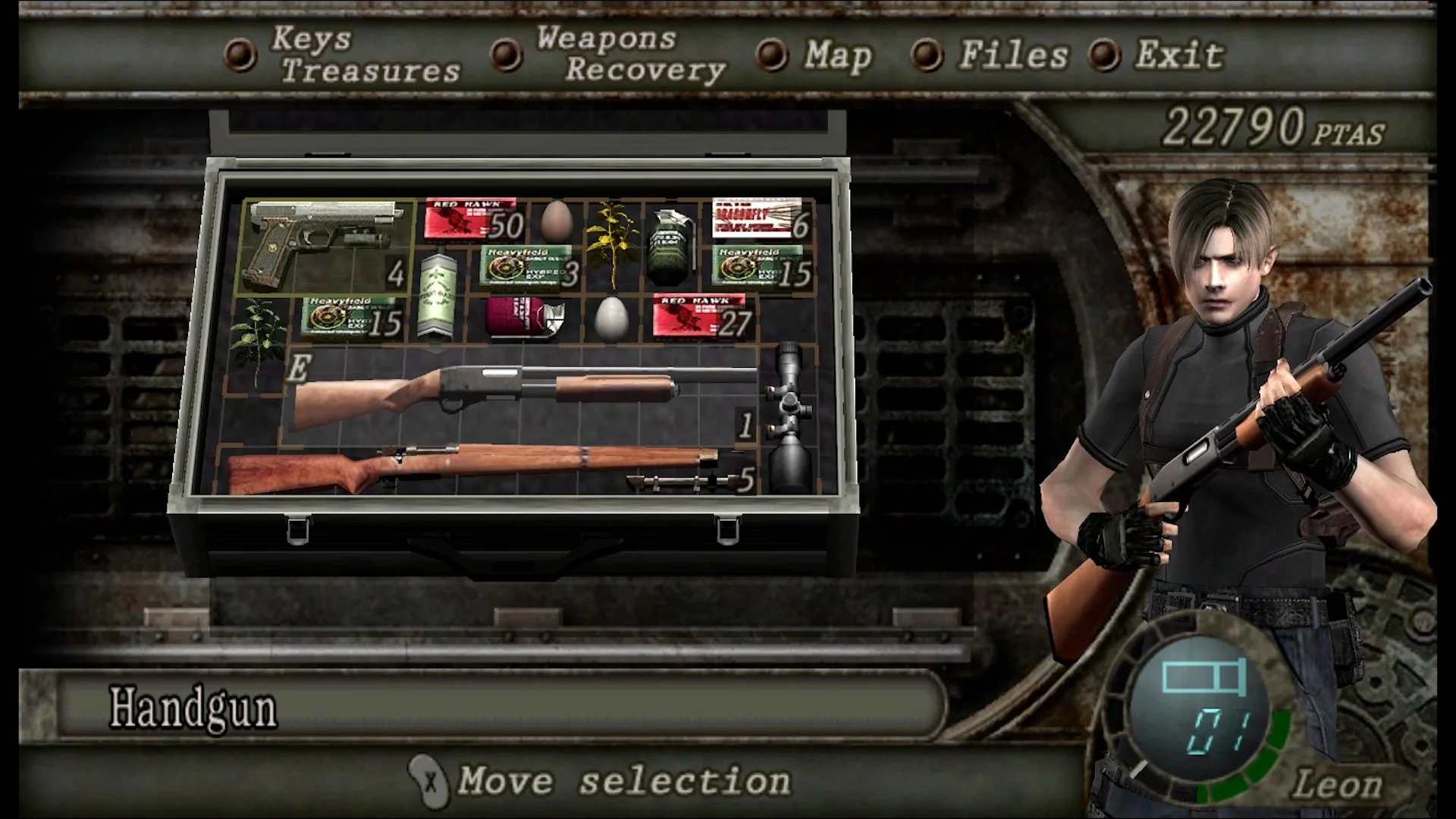
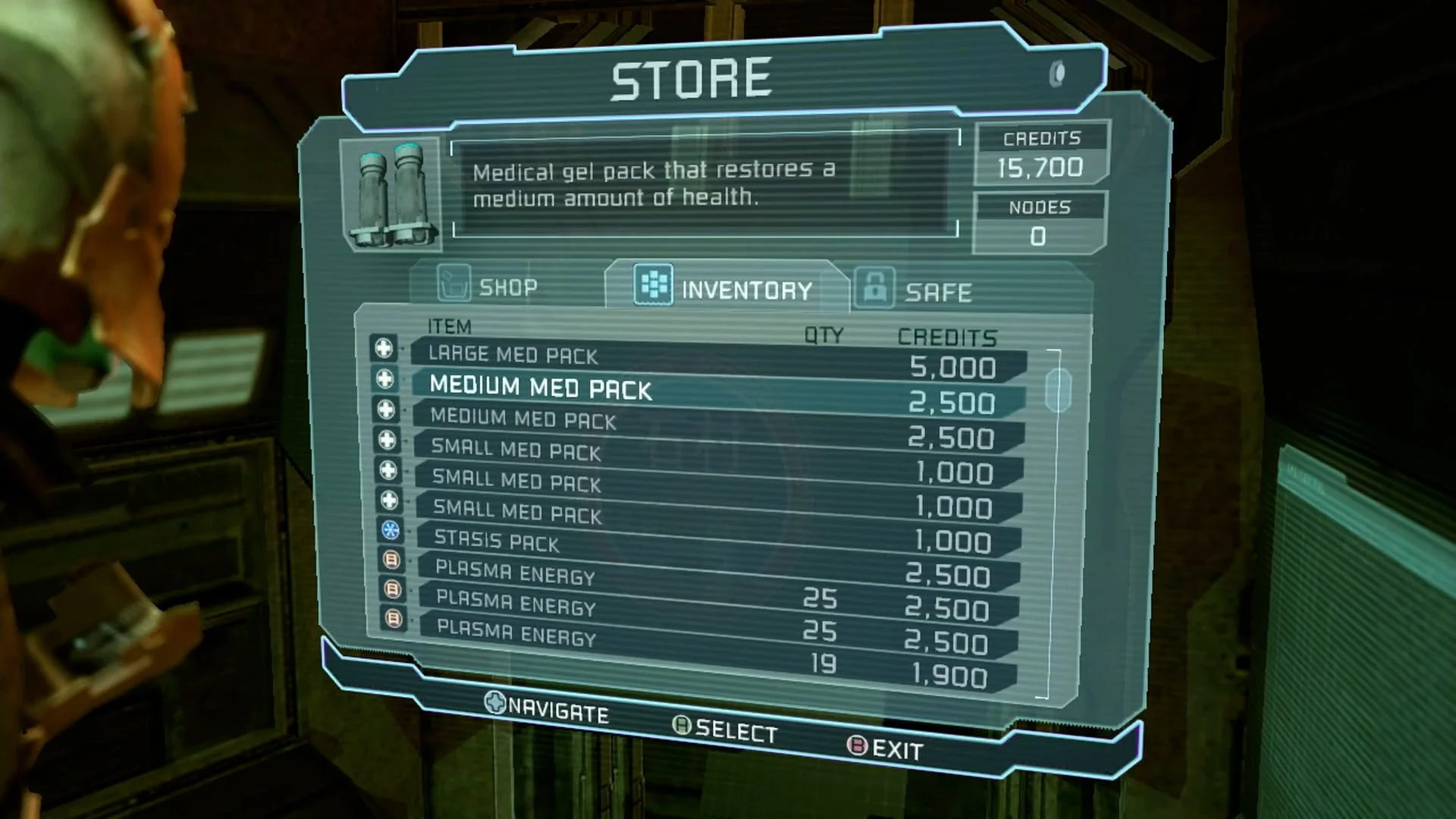
These resources enemies drop aren’t just ammo and health, enemies will also drop currency, Peseta (Resident Evil 4), Credits (Dead Space) and Green Gel (The Evil Within). This gives you another incentive to engage in combat as you can spend the money you gain from combat to become more powerful, buy new weapons, larger inventories and weapon upgrades which further reduces vulnerability.
It would be misleading to suggest that Resident Evil 4 has the same resource scarcity as earlier games. When ammo falls below a certain level, enemies dynamically start dropping more. When I recently replayed the game, my inventory was so full of ammo by the time I reached the Merchant that I sold some of it to buy a larger case.
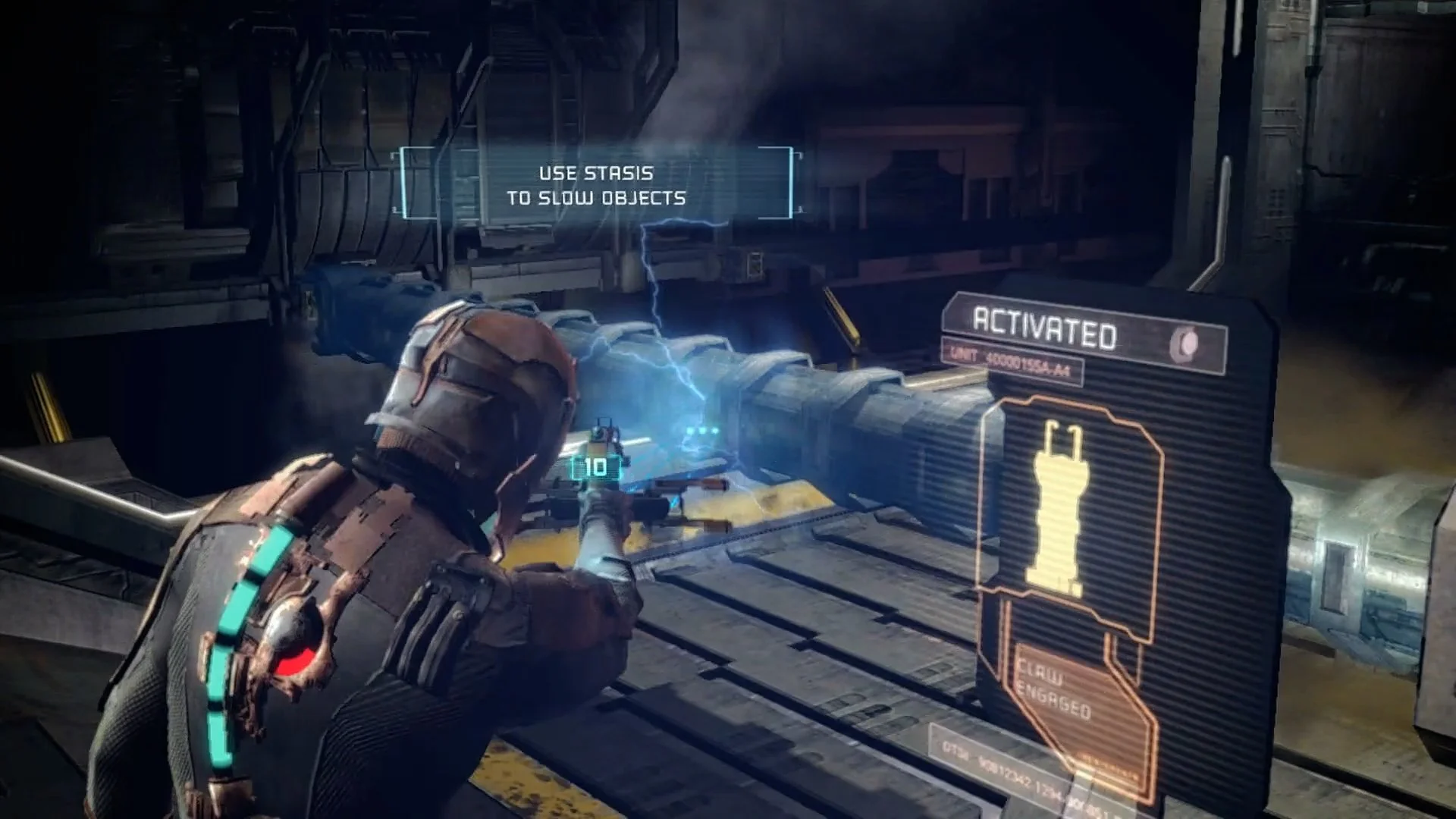
Puzzles in these more action heavy games are almost non-existent compared to early survival horror games. They are more consistent with puzzles found in action games, that are tied to one room and don’t require much thought.
The developers could have made these puzzles more involved but chose not to slow the pace. Instead, they serve as short breaks before the next action sequence.
I have heard many people say that “modern survival horror” become survival horror on harder difficulties, but those settings require you to get better at combat. Progress depends on precision aiming, hand-eye coordination and knowing the most efficient ways to kill enemies.
The irony is that the harder the game becomes, the more it focuses on action. In some cases, these games are trying to be two things at once: they barely give you enough ammo yet requires you to kill enemies to progress. Survival horror games solve this problem by allowing you to avoid combat when ammo runs out.
Where is the survival horror cut-off point for Resident Evil?
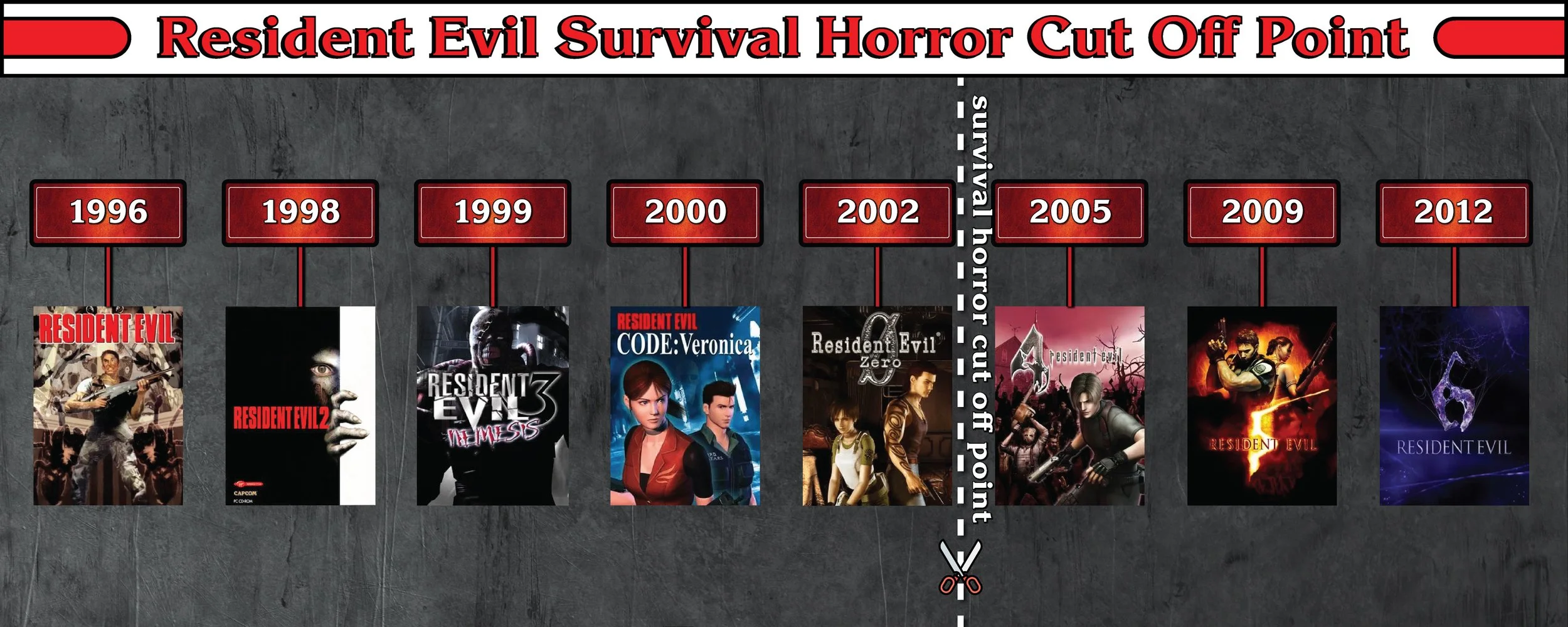
Resident Evil 4 is currently listed as survival horror on Wikipedia, while Resident Evil 5 is listed as a third-person shooter. For many people, this places the cut-off point between the two games, but that placement seems arbitrary.
Co-operative play and brighter environments make Resident Evil 5 feel less like survival horror, but compare the two games side by side and they share the same core gameplay loop, including precision aiming, enemy item drops, melee attacks and combat-led progression.
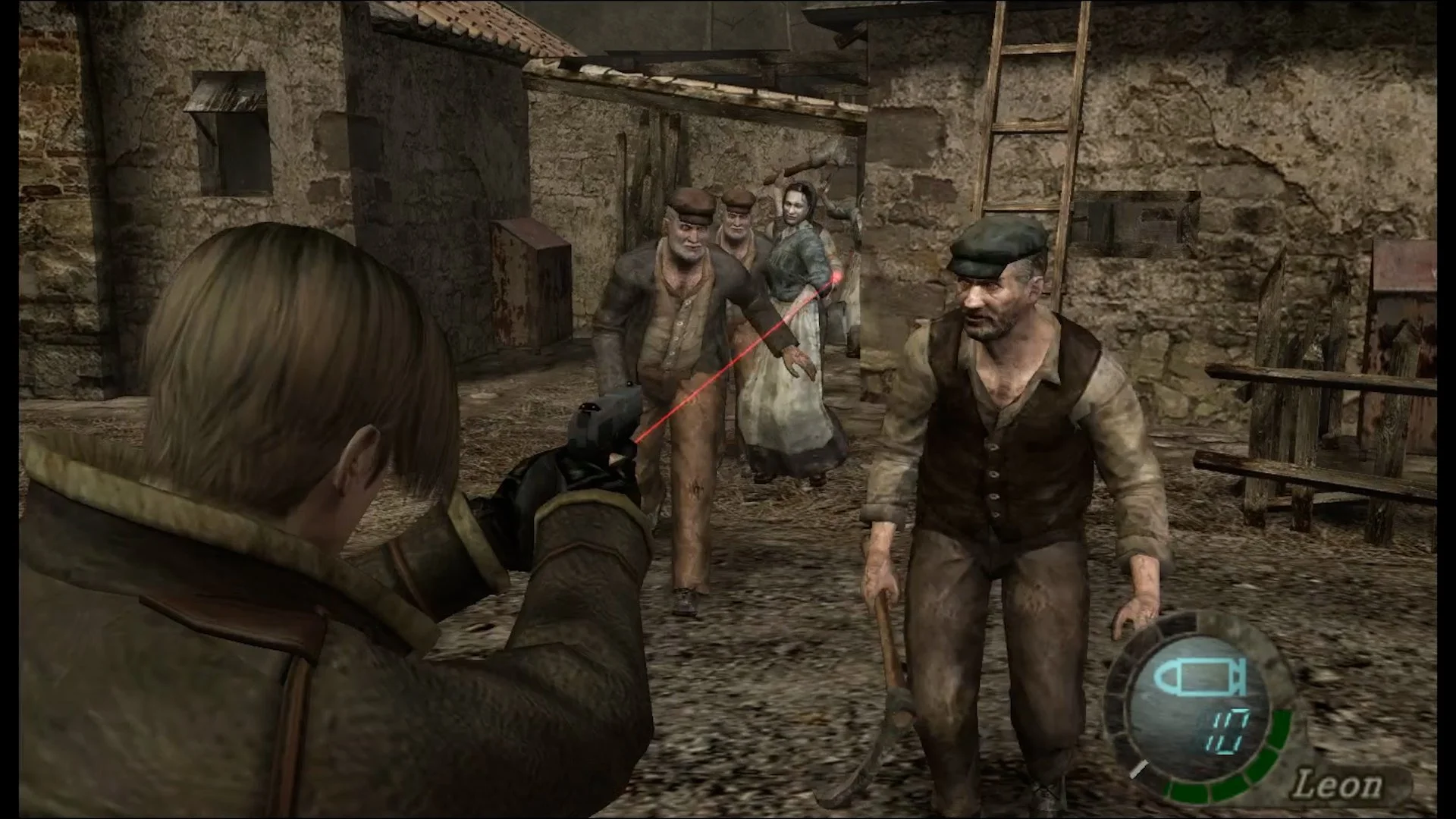
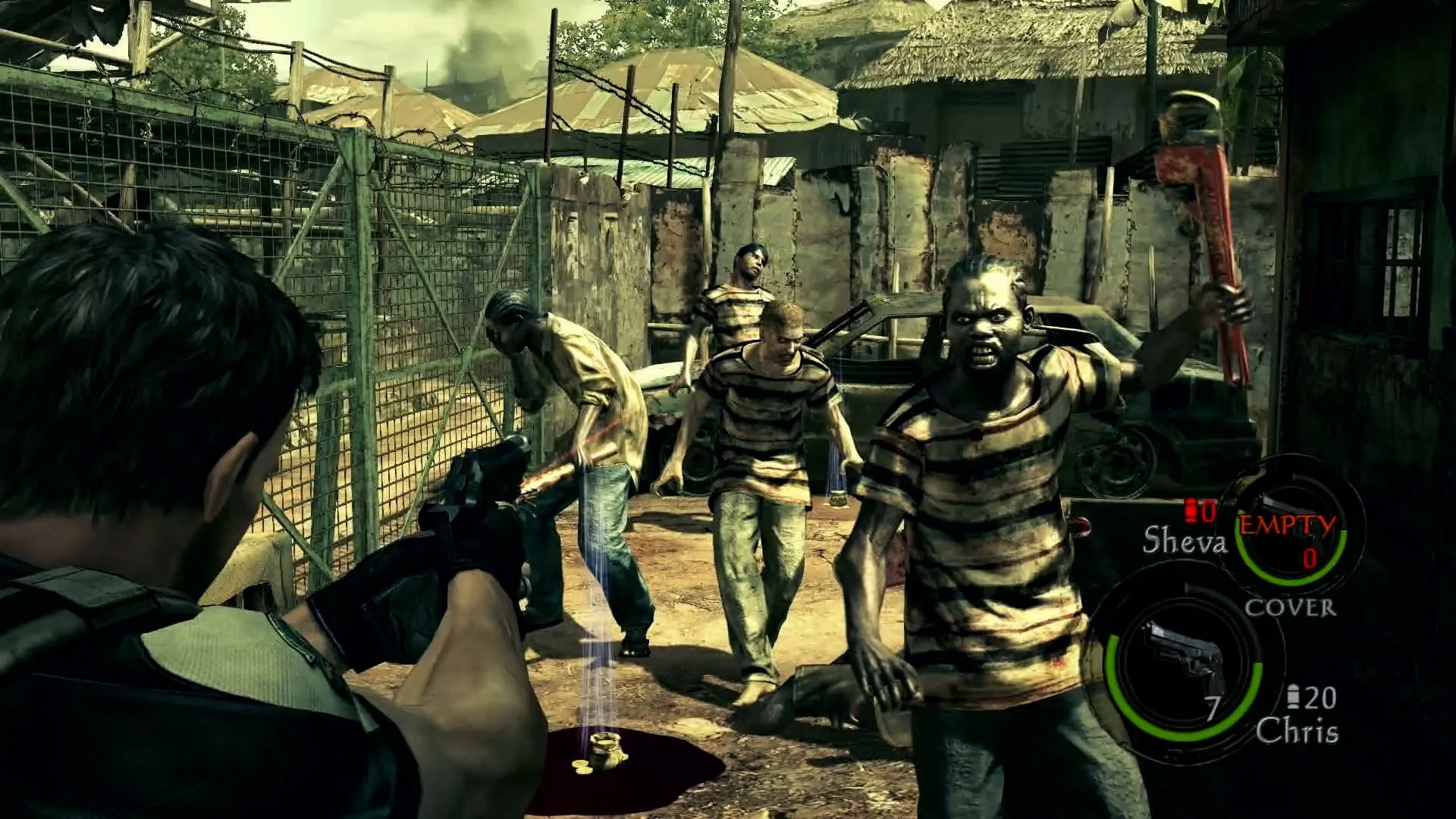
If genre labels are supposed to tell players what they will spend most of their time doing, then the clearer cut-off point comes before Resident Evil 4, not after it.
Resident Evil 4 is not action horror simply because it contains more combat. It is action horror because combat drives progression, produces resources, powers the upgrade system, shapes the level design and occupies a large part of the gameplay.
Genre labels are useful because they tell you what you will actually be doing for most of the game. A player looking for a slower-paced experience built around exploration, puzzle-solving and deciding which enemies to fight or avoid is looking for something different from someone who wants a combat-led game centered on shooting enemies. Using different labels helps distinguish between these experiences. In my view, including both under the survival horror label muddies the waters and makes it harder for fans to discover games that provide the experience they are looking for.
The survival horror genre has experienced a revival in recent years, but if we lose sight of what makes it distinct, we risk returning to a time when action horror dominates and new survival horror releases become rare once again.
How do you define survival horror? Share with us in the comments.
YOU MIGHT LIKE
Some horror games want to scare you. Remothered: Red Nun’s Legacy wants to make you uncomfortable. Very uncomfortable. Not through relentless violence or endless hordes of monsters, but by dragging you through a world built from trauma, religious fanaticism, family abuse, missing children, and disturbing imagery that often feels outright terrifying. It’s the kind of horror that lingers in your head long after you’ve put the controller down, even if parts of its story disappear into a fog of confusing twists and half-explained mysteries.