

Hands-on with Fatal Frame II: Crimson Butterfly REMAKE
The Classic Returns and the Village is Deadlier than Ever
The surprise announcement of a remake for Fatal Frame II: Crimson Butterfly back in September hit hard for many fans of classic horror games. The original game has risen to cult status over the past two decades, and now we have a ground-up remake from Team Ninja.
I have spent the weekend playing the full release of the remake on my Xbox Series X and was joyfully creeped out by all the ghastly wraiths and apparitions in this updated version. I had not played the original version of Fatal Frame II prior to this remake, having only played the first game and some of the more recent releases. Thus, going into this, I had no idea what to expect.
This is a spoiler-lite preview, nothing after the first portion of the game will be directly revealed.
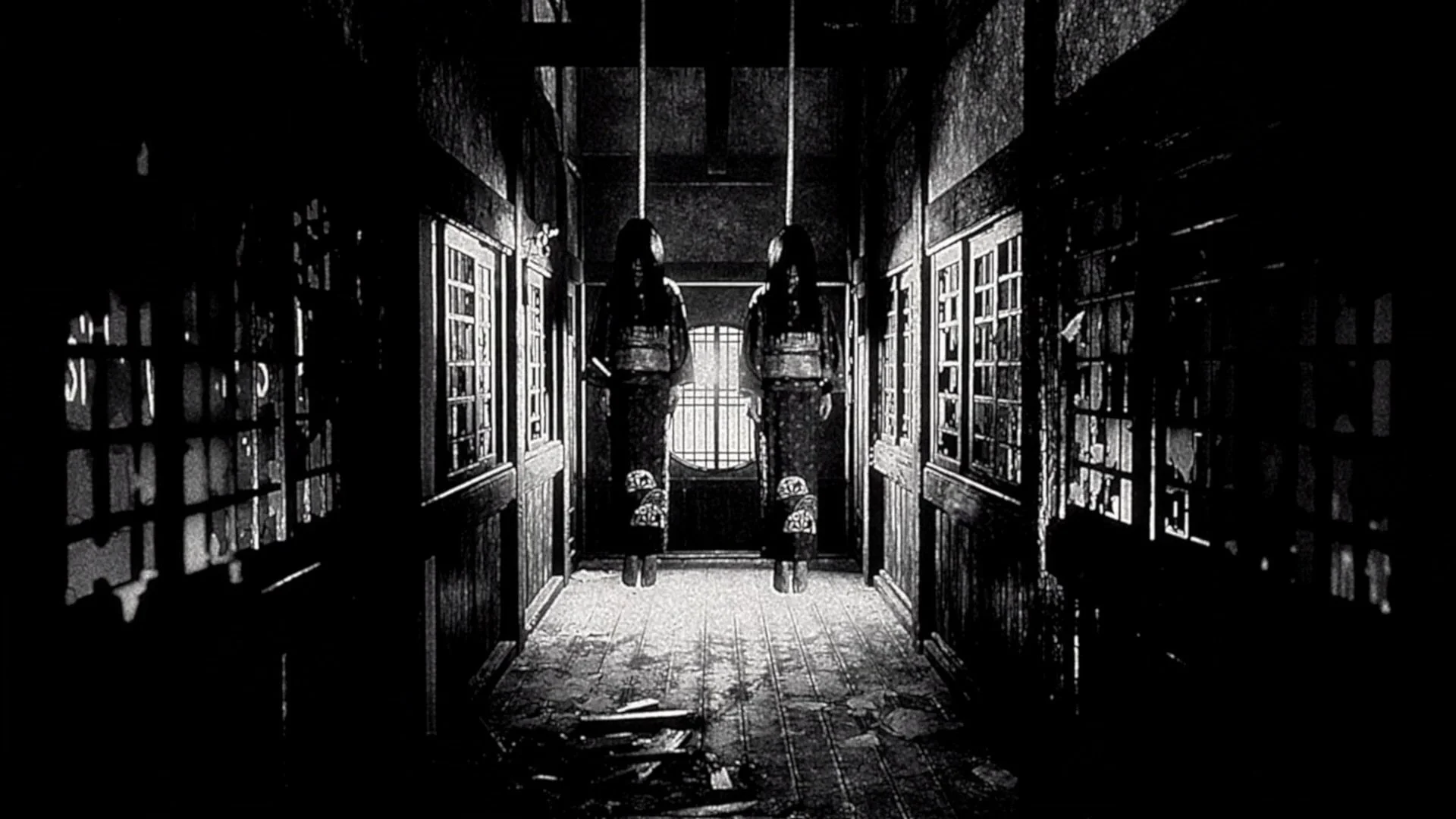
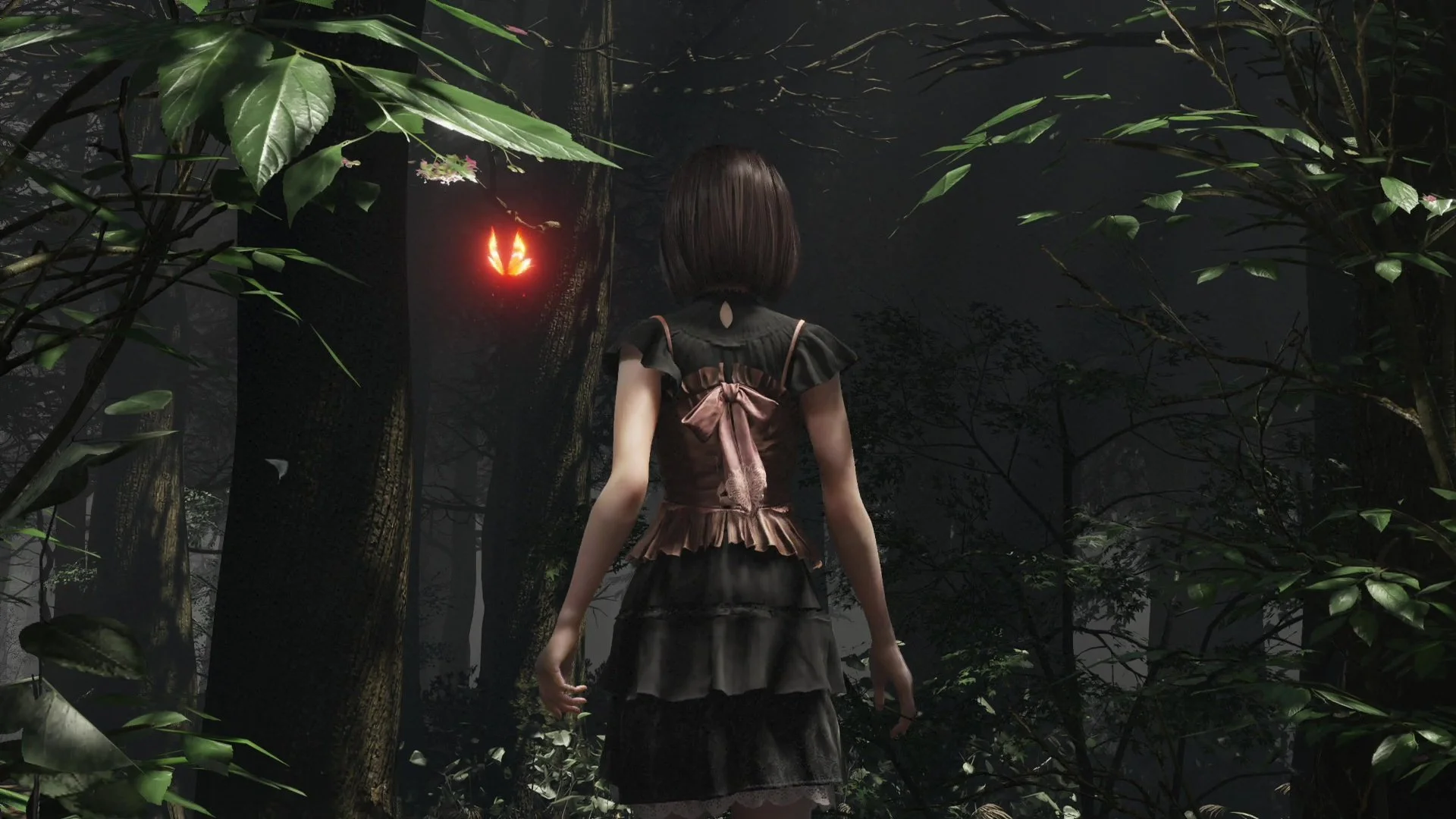
In true Fatal Frame fashion, this game is a Japanese tale of ghosts and unfortunate events that lead to spirits abruptly departing the living world. Playing these games always feels like the parts of an anime where the characters tell ghost stories or go ghost-hunting – it's all poignantly cultural and distinct. The story focuses on twin girls Mayu and Mio Amakura, the player character. At the outset, the girls are visiting a seemingly calming stream in the woods. Mio thinks back to a past event when Mayu was injured when they were younger, and well, Mayu wanders off after a butterfly of the crimson variety. Mio pursues her sister and finds themselves trapped in the “lost Village”, a place where spirits run amok and the girls have nothing else pressing to do but investigate.
Aside from the loose Japanese ghost story plot, is all we need to set up a properly dark, creepy village full of spooky ghosts. It is in the opening moments that the game introduces how to play and control Mio, which feels smooth and much more modern compared to the previous games in the series, at least the ones I have played.
Gone are the tank controls of the original, now offering 3D movement and full camera control. Since there are now no fixed cameras, you don't have to worry about 3D movement not translating well on-screen, unlike other games that pair fixed cameras with a 3D control system.
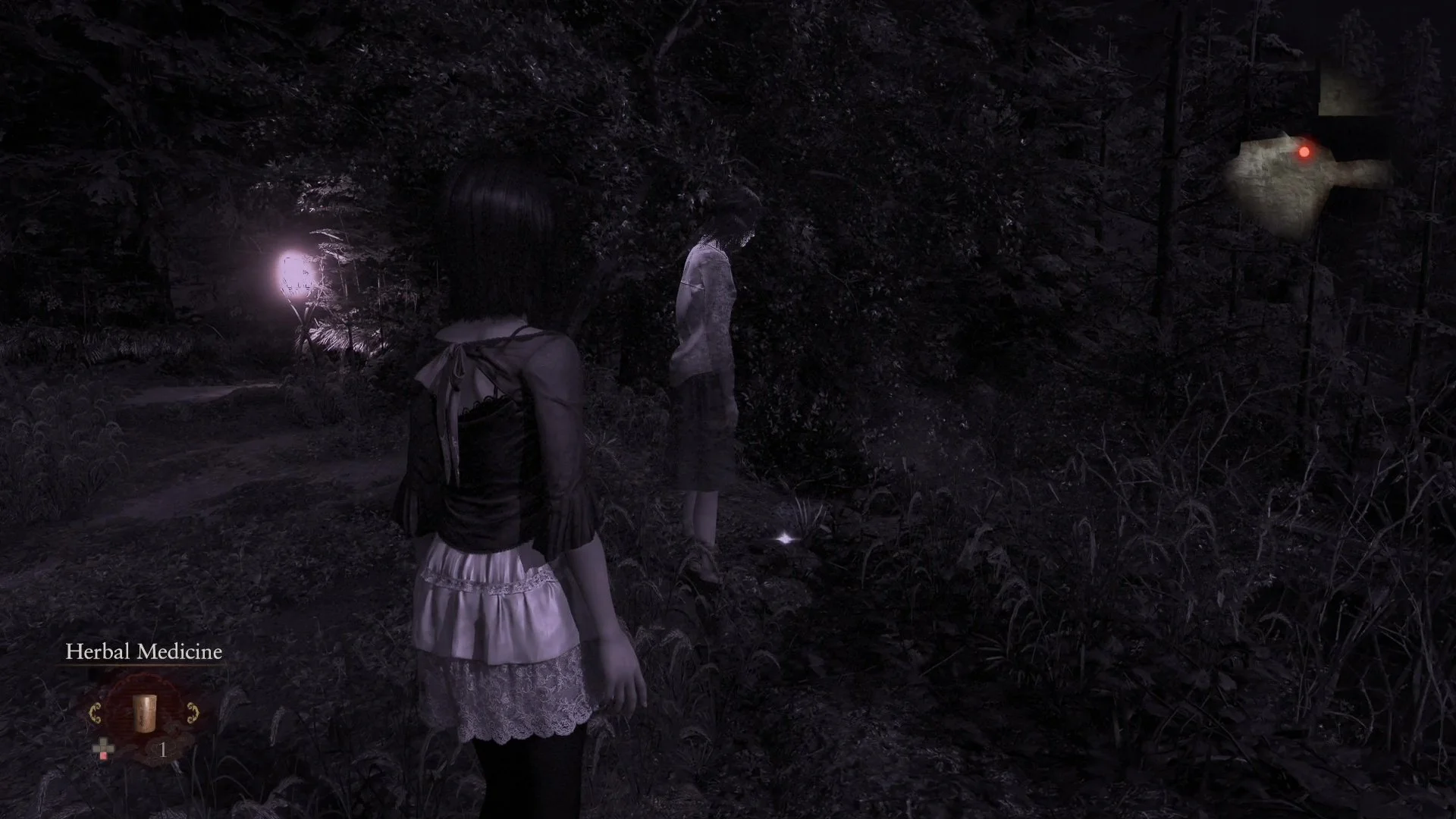
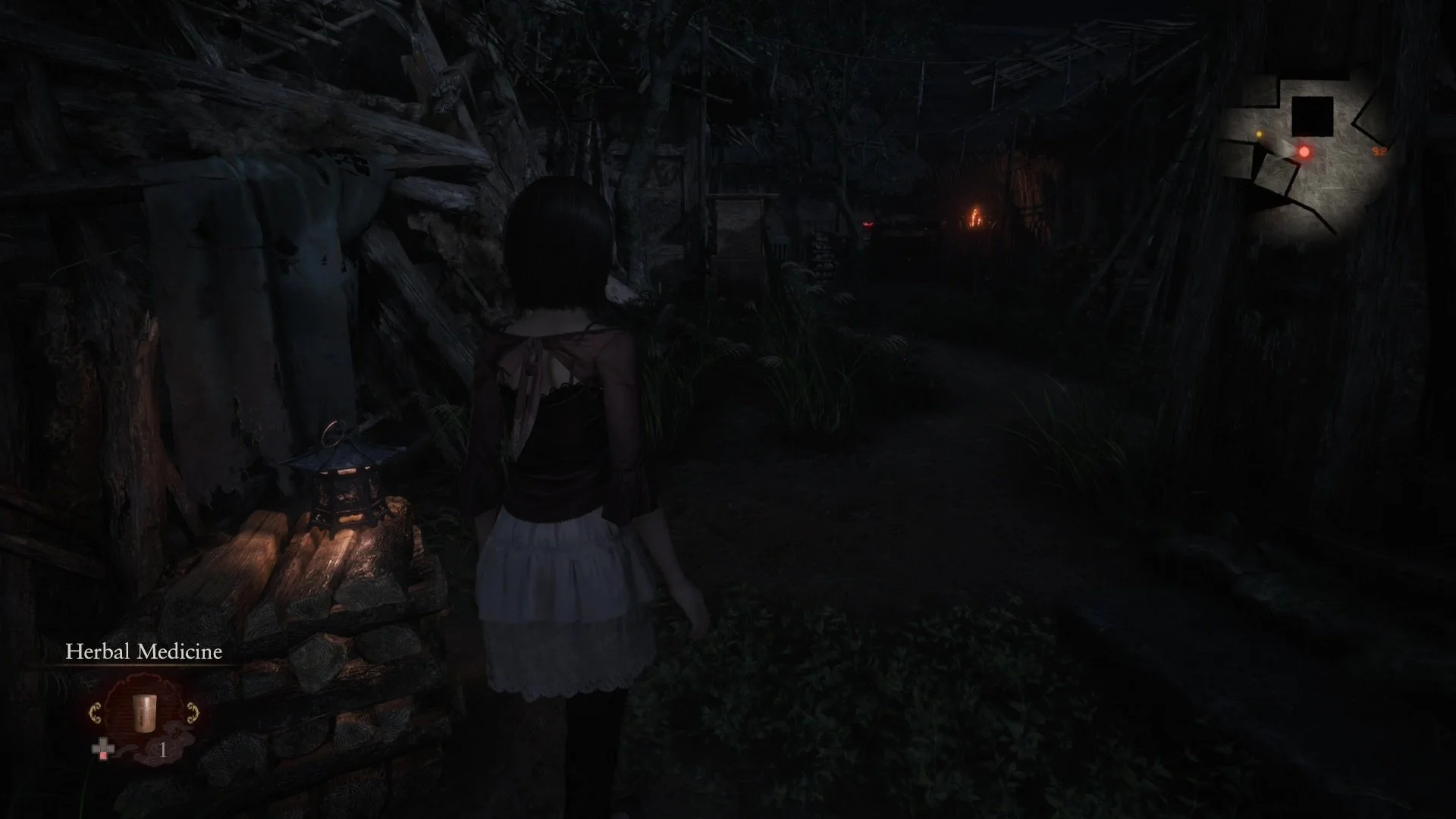
Another interesting mechanic is the game’s focus on keeping both sisters safe. By holding the right trigger, Mio takes Mayu’s hand and the pair huddle together. This also plays a role in your health and willpower, as holding hands allows the siblings to regain willpower and health. Aww… the power of love.
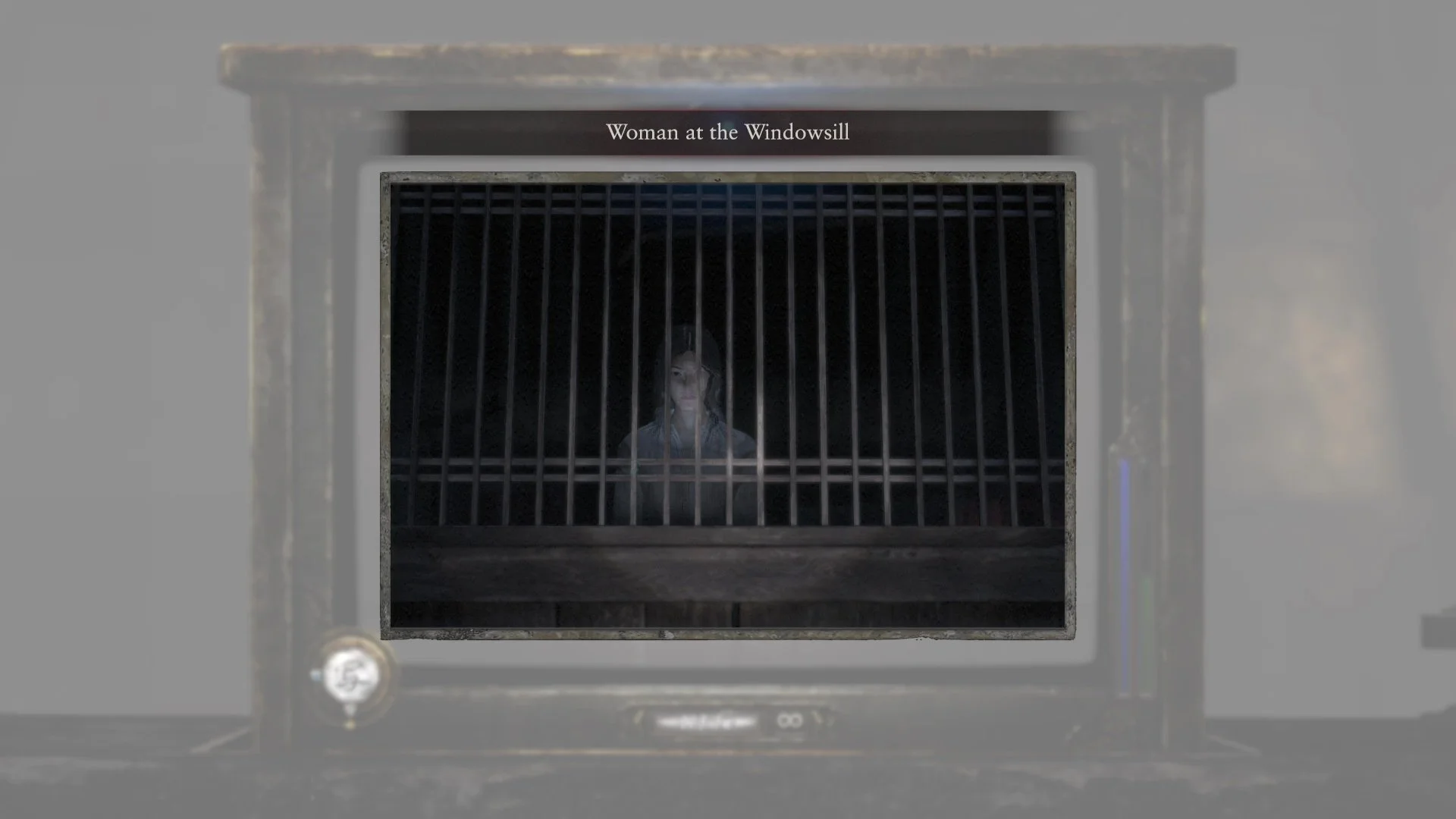
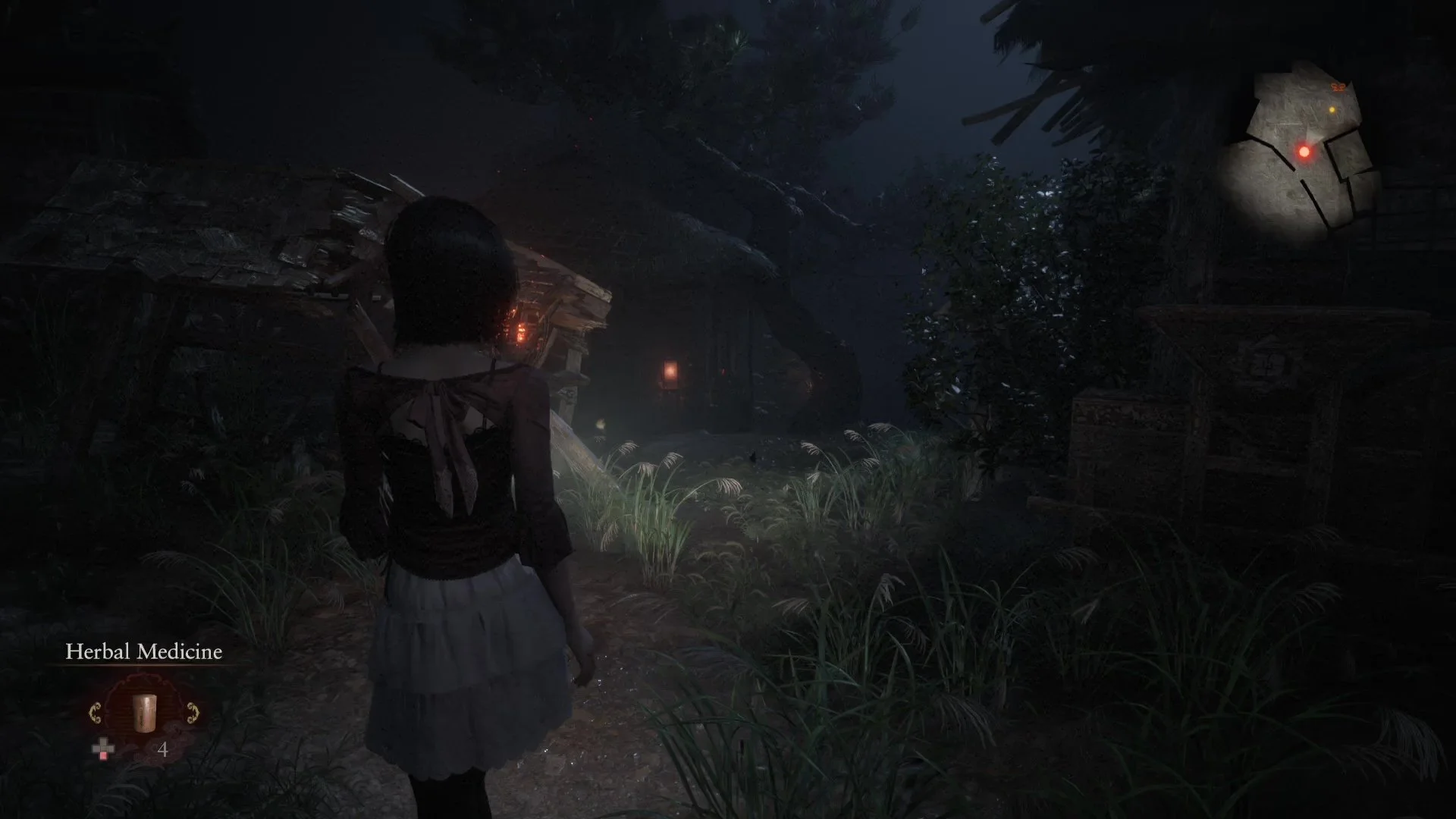
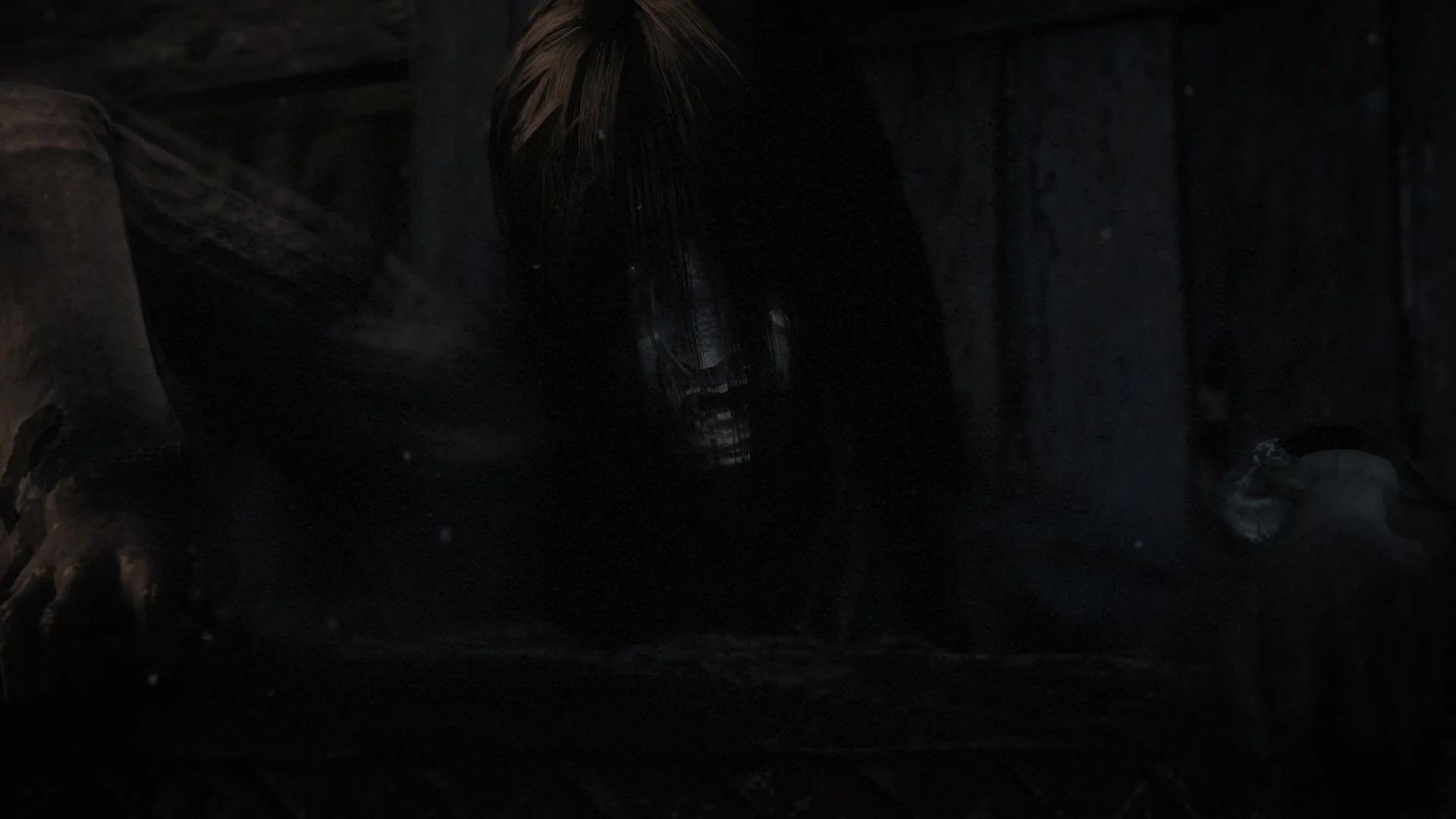
As the girls enter the village, they notice a figure in the first house and think, “Let's go ask them what’s going on,” and stereotypically soldier on like classical horror protagonists. Once you’ve entered the house, you get your first ghostly apparition striding across a hallway for a heartbeat. There are journals around the house written by a woman who came to the village looking for her boyfriend, who disappeared. Mio has a vision of the woman searching for him. I soon came to a room with a flashlight (yay) and a lantern that let me save my progress. Mayu and I continued to make our way through the house looking for clues, and as we approached a staircase to the upper floor, a child's ball bounced down the stairs, but there was no one at the top. We soon come to a room where an innocent camera falls to the floor, and Mayu tries to stop Mio from touching it. Mio has a vision of the camera's creator, who explains that it is the Camera Obscura and it has the power to exorcize spirits, but at a cost.
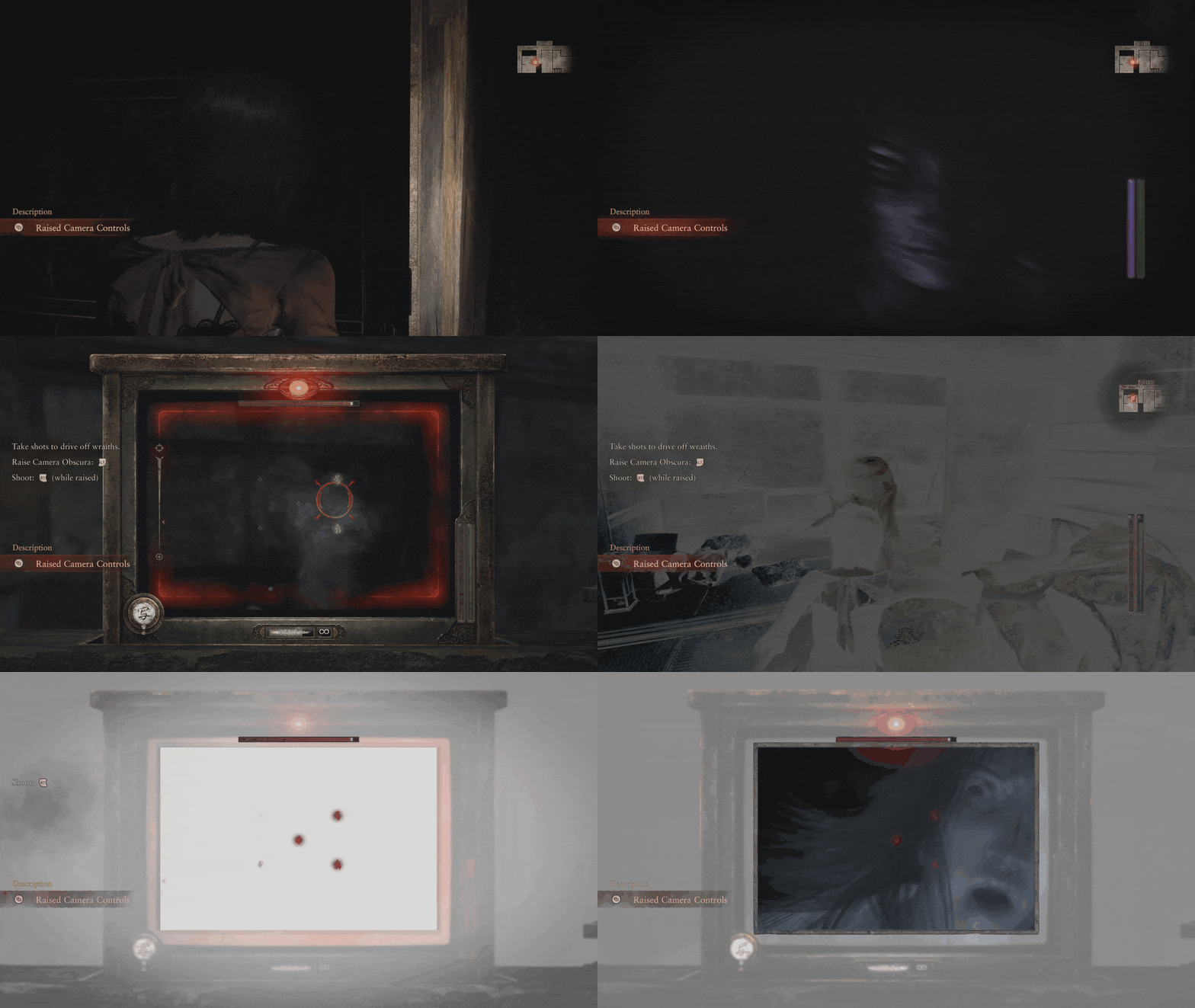
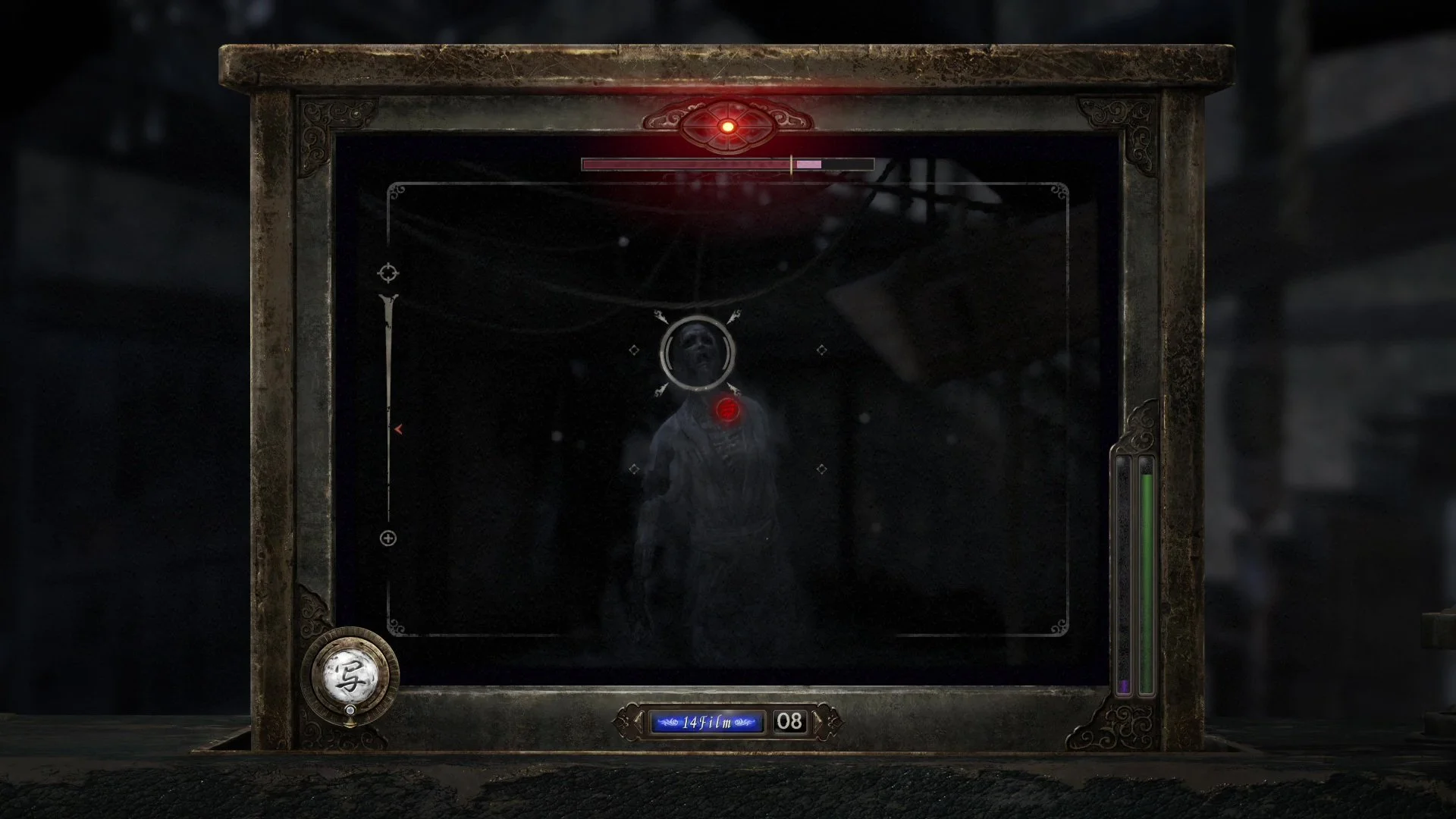
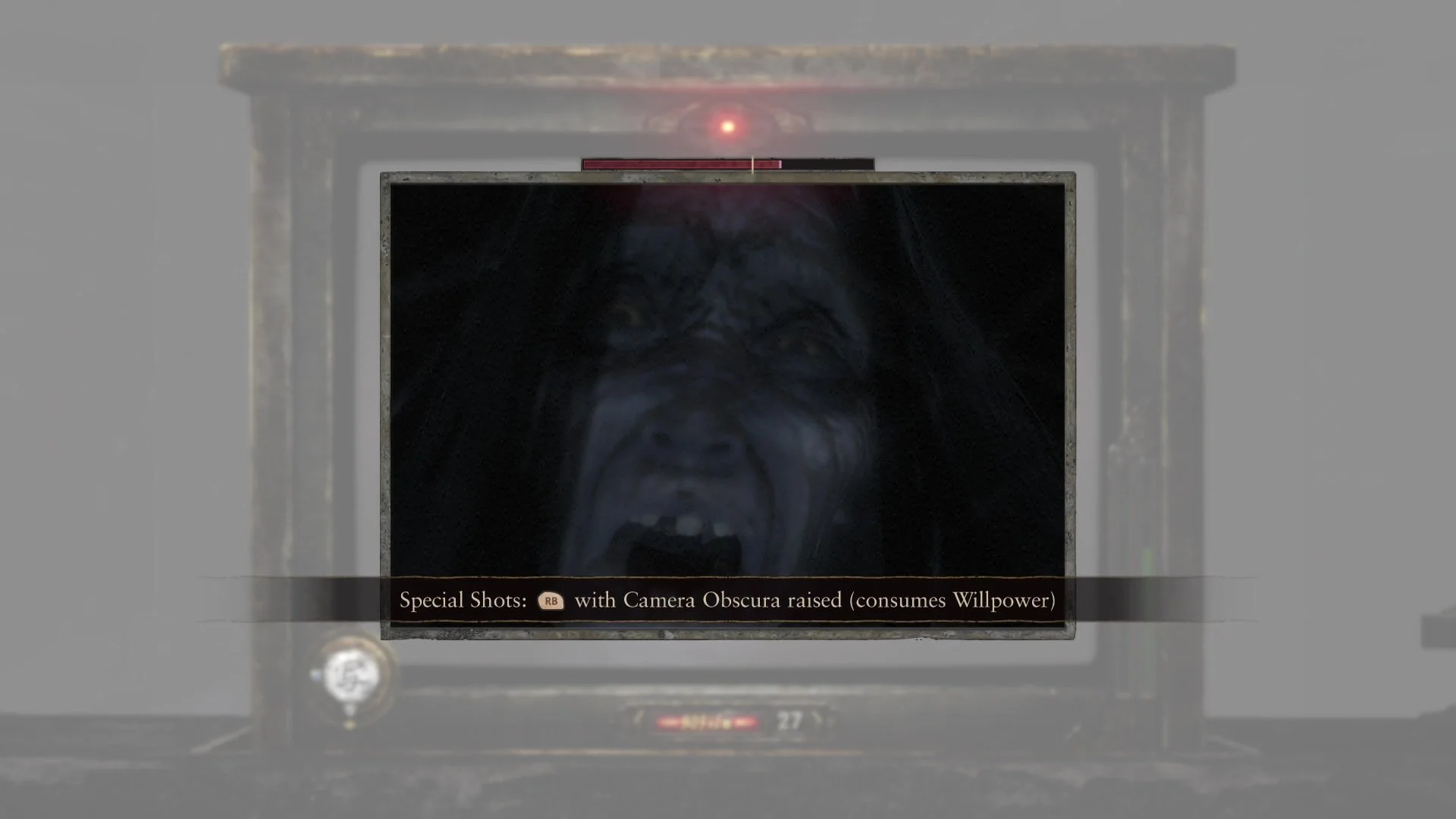
Now that we have a ghost-busting camera, a ghost decides to welcome us. This is when I got to put my phantasm photo skills to the test. Using the Camera Obscura, I positioned the wraith in frame and took a shot, but only did a small amount of damage, represented as a health bar at the top of the camera’s viewfinder.
The wraith rushed me and knocked me down, disappearing. After reaching my feat I desperately looked around, only to find the spirit pinning Mayu to the floor. I took a quick shot, knocking the spectral woman off. I felt like a scared young girl myself as I fumbled to operate the camera and waited until the last moment to take the best photo of the ghost, capture more of her essence, and eventually finish her off. The wraith howled as she slipped to the other side and was gone. It was after this encounter that I thoroughly read the guides that had popped up explaining how to fight the ghosts with the camera. It was a good thing, too, as we were attacked by the spirit of a man shortly after.
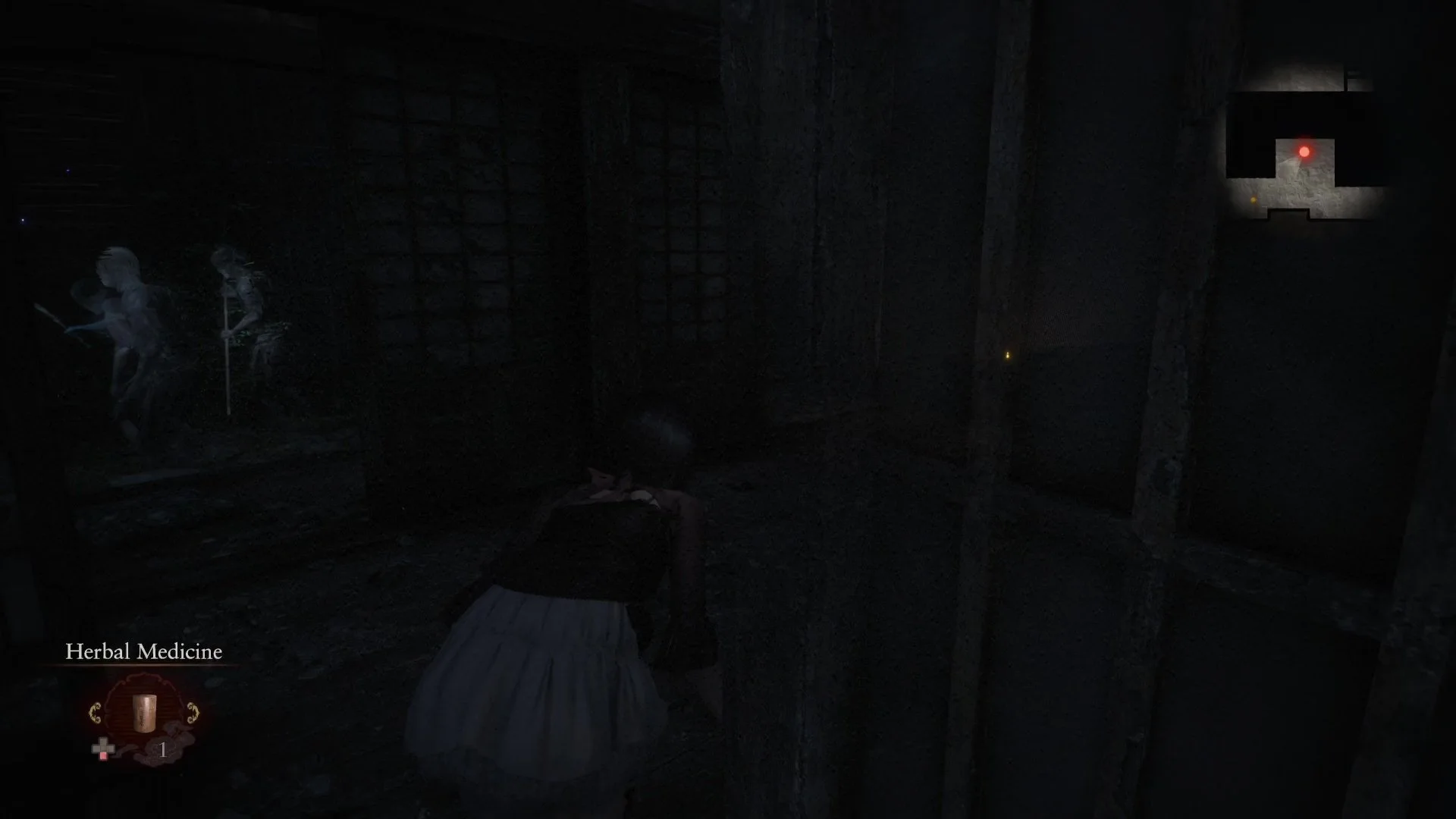
I found myself struggling with ghost fights, as it felt like I wasn’t doing enough damage. After dying several times, it hit me! These fights are meant to be hard. You are meant to feel somewhat helpless; stealth and avoidance are perfectly viable solutions. The core gameplay dynamic shifted for me after this epiphany. This also shifted my enjoyment, since I started playing the game altogether differently and I stopped hunting down every ghost, thinking I was Chris Redfield ripping through the plains of Africa.
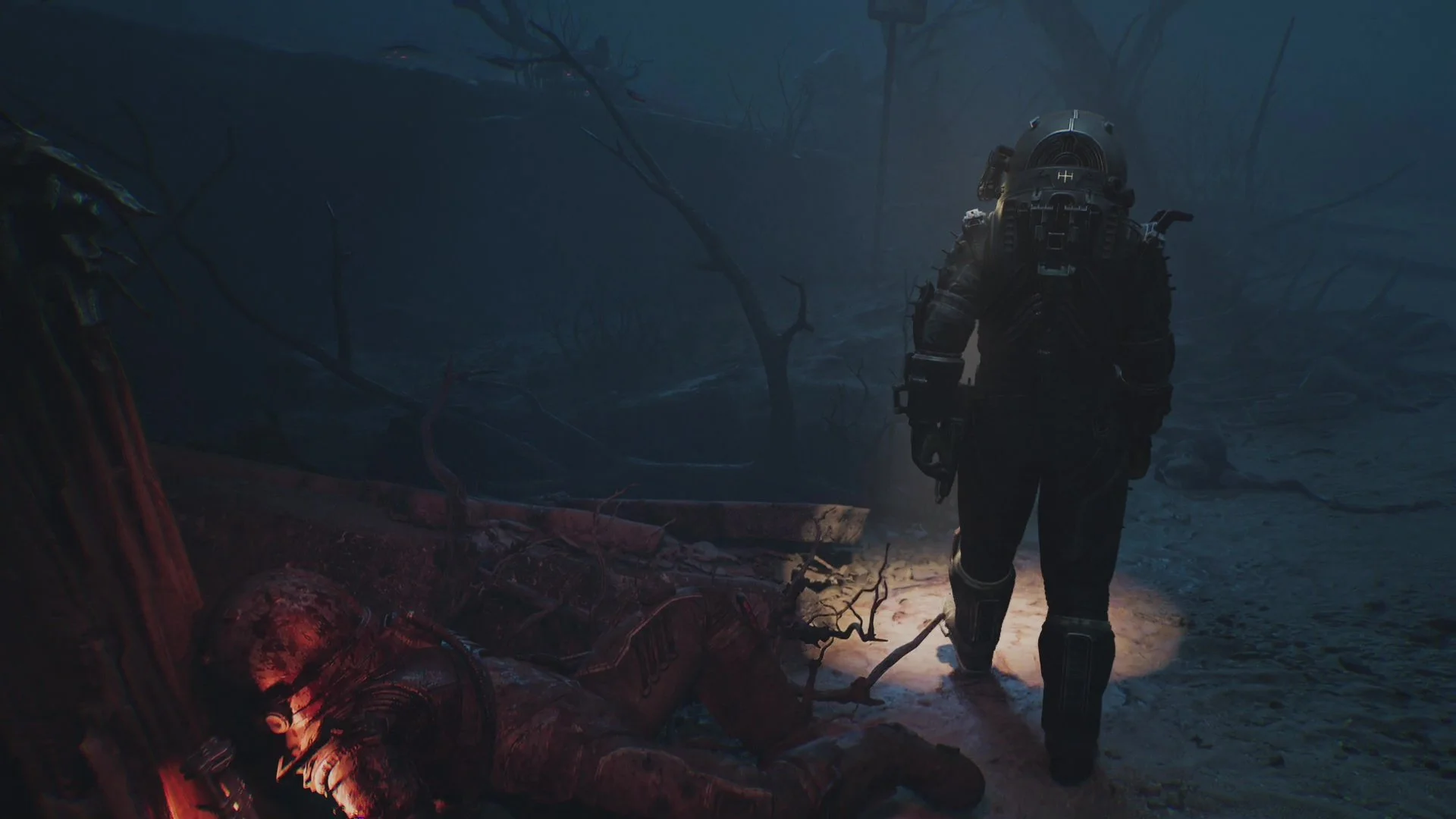
So far, the ghosts are spooky, and the village is full of details that make it feel like a real place in some quiet wood of Japan. The character models look great, with the girls having realistic features. Looking back at the original game, Team Ninja aged the twins up a few years, but did so respectfully. Nothing against a little fan service, but the jiggle physics on the young ladies in other entries can be a bit much, looking at you, Maiden of Black Water.
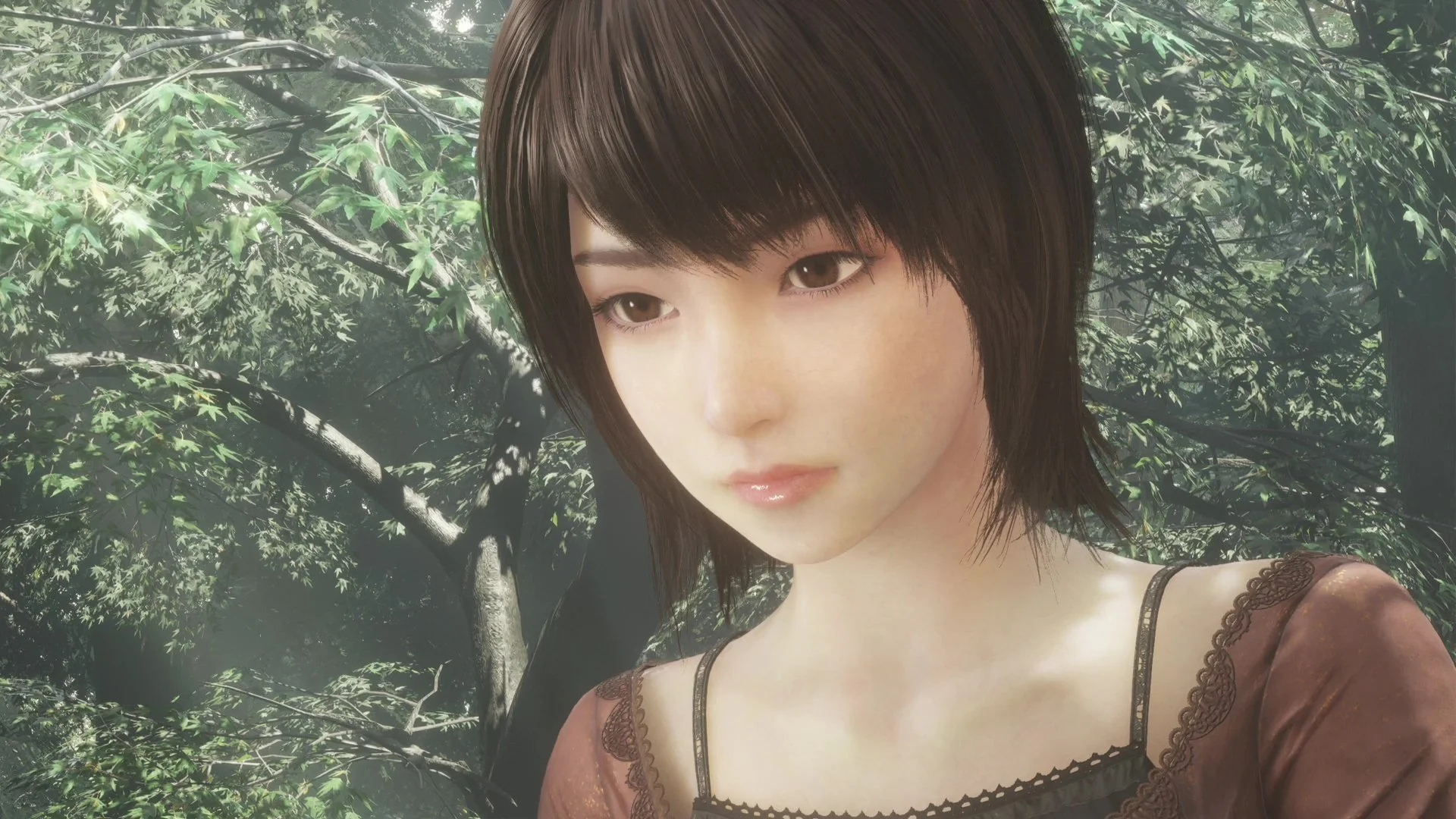
You can see Team Ninja’s influence in this updated version of the game, as the visuals feel reminiscent of the Ninja Gaiden games. This is a remake of a PS2 game, though, and on offer at a lower price point, so visually the game is heavily improved over the original, but it looks dated by today's standards. That isn’t necessarily a bad thing, but for those out there who like their games extra pretty and shiny, you may take issue. In previous games, they have always taken a more desaturated approach to the visuals, often using black-and-white flashbacks or visions to enhance the oppressive atmosphere. This game has a VHS-style filter, giving it a look like a playable 80s horror movie, making it extra crunchy on the aesthetics, and feeling like you are living a proper ghost tale of classic cinema.
So far, I have been pleasantly and thoroughly spooked by Fatal Frame II: Crimson Butterfly REMAKE. The setting is right up my alley as I love Japan and Japanese culture. The narrative style is not quite to my taste, though, as it leaves me questioning why anything is happening. This is a style of Japanese storytelling, though, and I am curious to see it through for the pay off, and to explore the mysteries of what befell the spirits you encounter. Yet, I am still early in the game, and maybe that's the point. I am excited to learn more about this lost village and its connection to these twin girls that were at the core of its history, where you find twin girl dolls everywhere. How does this relate to the twins Mio and Mayu? What effect does the Camera Obscura have on its users?
For anyone curious, a demo is available that lets you carry over your save data to the full game. Fatal Frame II: Crimson Butterfly REMAKE releases on March 12th, 2026 on PlayStation 5, Nintendo Switch 2, Xbox Series X|S and Windows PC via Steam.
Stay tuned for our full review coming in Issue 5 of Fearzine Magazine.
Will you be playing Fatal Frame II? Is this your first time, or are you a returning veteran? Let us know in the comments.
A review key for Fatal Frame II Crimson Butterfly Remake was provided by Koei Tecmo. Screenshots were captured through recording Xbox Series X gameplay.
Check out the first 30 minutes of Fatal Frame II: Crimson Butterfly REMAKE below.



When I see a classic or retro game get a modern remaster, HD edition, or drag and drop port, I am usually pretty happy. At least until I see the name Aspyr attached to it. Aspyr has a reputation for terrible ports and even worse customer support, and when Legacy of Kain Soul Reaver 1&2 Remastered was announced, I went from thrilled to devastated in an instant.